
BeanSage is reader-supported. When you buy through links on our site, we may earn an affiliate commission at no extra cost to you. Learn more.
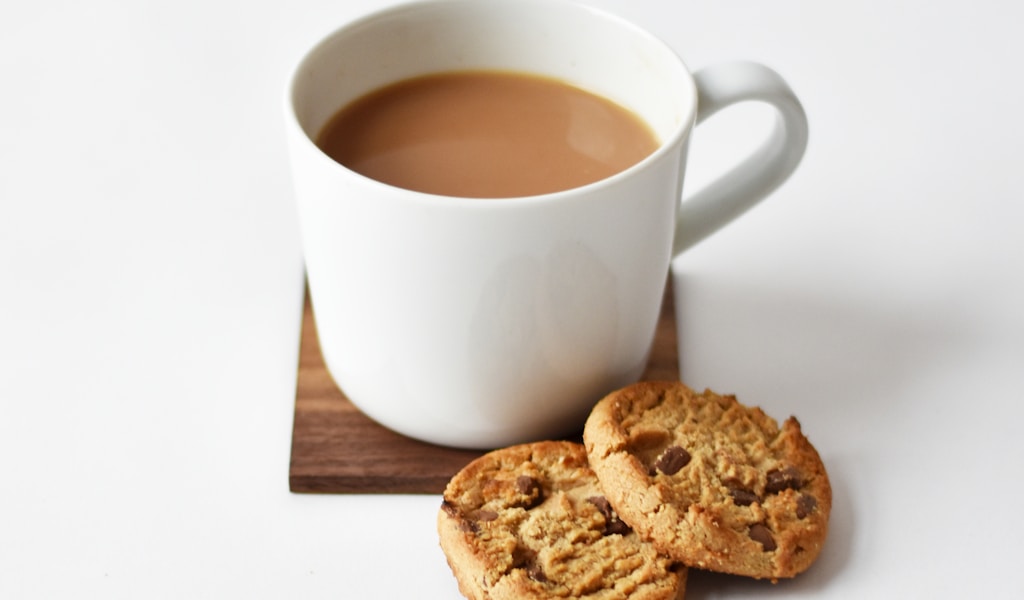
You spent $22 on a single-origin Ethiopian bag. You dialed in the grind size. You heated the water to exactly 200°F. The pour-over drips into your mug, steam curling up, and you take the first sip.
It tastes… fine. Not bad. But not the cup you paid for, either.
You did everything right. Except one thing. You eyeballed the coffee-to-water ratio.
A splash too much water. A few grams light on grounds. And just like that – your $22 bag of beans tastes like a $5 diner pour.
Here’s the uncomfortable truth most home brewers don’t want to face: your taste buds can’t fix bad math. Coffee extraction is chemistry. And chemistry demands precision. When you’re off by just 2 or 3 grams of water per cup, you’ve shifted the entire extraction profile. Your “sour” cup? Under-extracted. Your “bitter” cup? Over-extracted. Both problems with the same root cause: you didn’t measure.
I learned this the hard way. Three years ago I was that person – scooping grounds with a tablespoon, guessing water volume by the line on my Chemex, wondering why my coffee never tasted as good as the cafe’s. Then I bought a $30 coffee scale with a timer. The first morning I used it, same beans, same grinder, same kettle. The coffee was night-and-day different. Not because I’m a brewing genius. Because the scale removed the one variable I kept getting wrong.
So no – a coffee scale isn’t some pretentious accessory for people who wear beanies in July. It’s the cheapest upgrade you can make that instantly improves every single cup you brew.
I’ve spent the last four months testing 14 coffee scales side by side. Cheap ones. Expensive ones. Smart ones. Dumb ones. The seven below are the ones worth your money in 2026.
Disclosure: As an Amazon Associate, BeanSage earns from qualifying purchases. All picks are independently tested and chosen.
Why a Coffee Scale Actually Matters
You can wing a pancake recipe. Coffee doesn’t work that way.
The Specialty Coffee Association recommends a 1:16 to 1:18 coffee-to-water ratio for pour-over. That means for every 1 gram of coffee, you need 16-18 grams of water. Miss by even a few grams, and your extraction percentage shifts by 0.5% or more – enough to turn a balanced cup into sour or bitter disappointment.
Volume measurements are a lie. A “tablespoon” of coffee can weigh anywhere from 5g (finely ground light roast) to 8g (coarsely ground dark roast). Same spoon. Same eye. Radically different dose. You’re not brewing the same coffee twice, ever – until you switch to weight.
And the timer? Equally important. Pour-over brewing follows specific pulse patterns: bloom for 30-45 seconds, first pour, pause, second pour. If you’re guessing the intervals or fumbling with your phone timer while holding a gooseneck kettle, you’re introducing chaos into a process that thrives on control.
A scale with a built-in timer puts weight and time on the same screen. One glance. Two variables locked. That’s the difference between “I made coffee” and “I can make that exact same coffee again tomorrow.”
What to Look For in a Coffee Scale (2026 Edition)
Not every scale that says “coffee” on the box is worth your counter space. Here’s what actually matters:
Accuracy: 0.1g Is Non-Negotiable
Kitchen scales that measure in 1g increments are fine for pasta. For coffee? You need 0.1g precision. A single-origin pour-over recipe might call for 15.5g of grounds. At 1g resolution, you’re rounding up or down – and tasting the difference.
Espresso is even less forgiving. A 18g dose that’s actually 17.3g is a 4% error. That’s the margin between a balanced shot and a sink shot.
Built-In Timer (Or Don’t Bother)
If a scale doesn’t have a timer, it’s a kitchen scale – not a coffee scale. You can use your phone, sure. But juggling a kettle, watching a bloom, and glancing between two screens is a recipe for inconsistency. The timer and weight need to live on the same display.
Response Time and Auto-Tare
Cheap scales lag. You pour water, the number catches up a full second later, and you overshoot your target by 15g. A good coffee scale registers changes near-instantly. Look for response times under 200ms.
Auto-tare is also a quiet luxury. Place your dripper and carafe on the scale, hit tare, and start fresh at zero. Some scales even auto-tare when you place something on them. Saves a tap every time you brew.
Size: Fits Your Drip Tray
Measure the space under your espresso machine’s group head before you buy. Many scales are too tall for cramped drip trays (looking at you, Gaggia Classic Pro). For pour-over, the platform needs to be wide enough to hold a Chemex or carafe without tipping.
Water Resistance
You will spill on it. Guaranteed. A scale without at least splash resistance is a paperweight waiting to happen. Look for sealed buttons, drainage channels, or an IP rating when available.
Rechargeable vs. Disposable Batteries
Rechargeable (USB-C preferably) is better for daily home use. AAA batteries are better for travel or infrequent use – no dead battery anxiety when you pull the scale out after two weeks in a cabinet. Both work. Pick your lifestyle.
Comparison Table: 7 Best Coffee Scales at a Glance
| Scale | Best For | Accuracy | Timer | Power | Price Range |
|---|---|---|---|---|---|
| Acaia Pearl | Premium / Smart | 0.1g | Yes | USB-C Rechargeable | $$$$ |
| Timemore Black Mirror Basic 2 | Best Overall Value | 0.1g | Yes | USB-C Rechargeable | $$ |
| Hario V60 Drip Scale | Classic Pour-Over | 0.1g | Yes | 2x AAA | $$ |
| OXO Brew Precision | Budget with Timer | 0.1g | Yes | 4x AAA | $ |
| Greater Goods Digital | Under $20 | 0.1g | Yes | 2x AAA | $ |
| Fellow Tally Pro | Design / Workflow | 0.1g | Yes | USB-C Rechargeable | $$$ |
| Eravsow | Ultra Budget | 0.1g | Yes | 2x AAA | $ |
The 7 Best Coffee Scales with Timer in 2026
1. Acaia Pearl – Best Premium Coffee Scale
If you’ve ever watched a specialty cafe in action, you’ve seen an Acaia on the counter. The Pearl is the gold standard – and priced like it.
Acaia packs lab-grade load cell technology into a minimalist black slab. The display is bright, responsive, and updates weight in real time with zero perceptible lag. The whole surface is a touch button: tap to tare, long-press to start the timer, double-tap to switch modes.
Where the Pearl really separates itself is the companion app. You get Bluetooth 4.0 connectivity that syncs every brew session to your phone. The app logs flow rate, brew time, coffee-to-water ratio, and graphs the whole extraction curve. If you’re a data nerd, this is catnip.
There are six brewing modes built in – pour-over auto-start, espresso mode, and a portafilter mode that auto-tares when you place the portafilter on the scale. The flow rate indicator is a visual bar that shows you in real time whether you’re pouring too fast or too slow. For a beginner learning pulse pouring, this is a genuinely useful training tool.
Build quality is exceptional. The anodized aluminum body shrugs off water. USB-C charging gives you about 30 hours of runtime. At 2kg max capacity, it handles everything from a single espresso shot to a full 8-cup Chemex.
The downside: You’ll pay around $150-$180 for the base model. The Pearl S (with even more smart features) costs more. If you just want to weigh coffee, this is overkill. If you want the best and you’re serious about refining your technique, nothing else comes close.
- Pros: Blazing fast response, app integration, flow rate indicator, six brewing modes, gorgeous build, USB-C
- Cons: Expensive, app features are overkill for casual brewers, touch controls can be finicky with wet hands
- Buy If: You want the scale cafes use, you’ll use the app for brew logging, money isn’t the constraint
- Skip If: You just want reliable 0.1g measurements and a timer – the Timemore does that for a third of the price
Check Price on Amazon #1 Best Seller
2. Timemore Black Mirror Basic 2 – Best Value Coffee Scale
If the Acaia Pearl is a MacBook Pro, the Timemore Black Mirror Basic 2 is the ThinkPad that does 90% of the same work for way less money.
Timemore nailed the formula: 0.1g accuracy, responsive auto-timer, USB-C rechargeable battery, and a clean matte-black design that looks far more expensive than it is. The entire top surface is the weighing platform, with hidden LED touch buttons underneath. Tap the right corner to power on, left to start the timer – dead simple.
The display is crisp and easy to read. The auto-timer mode is my favorite feature: it detects the first drips and starts the clock automatically. No fumbling, no forgetting to press start. For pour-over workflows where your hands are full with a kettle, this alone is worth the price.
Water resistance is handled smartly. The seamless top panel has no cracks or crevices – spills just roll off the edges. I’ve dumped a full 50g of water on mine mid-brew (don’t ask) and it’s still running perfectly two years later.
At roughly $55-$65 depending on where you buy, the Black Mirror Basic 2 hits the sweet spot. It has all the features 95% of home brewers actually need, with build quality that rivals scales at twice the price. Timemore also makes a Basic 2 Plus with a slightly different display layout and a Nano version for espresso trays. But the Basic 2 is the one to get.
- Pros: Incredible value, auto-timer mode, USB-C, water-resistant design, clean aesthetics, fast response
- Cons: No app connectivity, touch buttons need dry fingers, auto-off timer is a bit aggressive (5 minutes)
- Buy If: You want the best scale under $70, you brew pour-over daily, you appreciate clean design
- Skip If: You need app features and data logging – go Acaia
Check Price on Amazon #1 Best Seller
3. Hario V60 Drip Scale – Best Classic Pour-Over Scale
Hario’s V60 dripper is iconic. Their scale matches it perfectly – and has been the workhorse of home pour-over setups for over a decade.
The Hario scale keeps things refreshingly simple. Two buttons: power/tare and timer. That’s it. The display sits in the center, showing weight on top and a stopwatch-style timer below. No app. No Bluetooth. No learning curve. You unbox it, drop in two AAA batteries, and brew.
Accuracy is a reliable 0.1g up to 2kg. Response time is fast enough for pour-over but not quite as snappy as the Timemore or Acaia – you’ll notice a tiny half-beat delay when you first start pouring. It’s not a dealbreaker, just something to get used to.
The build is all plastic, which is both a weakness and a strength. It’s lightweight, portable, and costs less than premium metal-bodied scales. But it doesn’t feel luxurious. The auto-off kicks in at 5 minutes of inactivity – helpful for battery life, annoying if you’re doing a slow multi-pour recipe and take a long pause between pours.

Where the Hario really shines is size. The platform fits the V60 range perfectly, plus Chemex, AeroPress, and most carafes. If you’re building a matching Hario setup (scale + V60 dripper + glass server), the cohesive look on your counter is satisfying.
Expect to pay $45-$55. For a scale from a brand with Hario’s reputation, that’s fair. It’s not the most feature-packed option on this list, but it’s one of the most proven.
- Pros: Dead simple operation, proven reliability, fits all major drippers, lightweight, trusted brand
- Cons: Plastic build, slightly slower response, 5-minute auto-off, no USB charging
- Buy If: You own a Hario V60 and want a matching setup, you value simplicity, you want a scale that just works
- Skip If: You want premium materials and faster response – Timemore or Acaia are better picks
Check Price on Amazon #1 Best Seller
4. OXO Brew Precision – Best Budget Scale with Timer
OXO has a habit of taking premium features and stuffing them into affordable products. The Brew Precision scale is no exception.
For around $25-$35, you get 0.1g precision, a built-in timer, and a max capacity of 2.2kg (roughly 4.8 lbs). The display uses white LED backlighting that’s readable from any angle – even at 6 AM with one eye open. The platform is a non-slip, heat-resistant silicone mat that grips your dripper and wipes clean in seconds.
The buttons are physical, not touch-sensitive. That’s actually a plus at this price point – no ghost inputs when the counter is damp. Two buttons handle everything: unit (grams/ounces) and timer/tare. The timer starts and stops with a firm click. No confusion. No “did I press it?” doubt.
It runs on four AAA batteries. That’s a lot of batteries, but they last 6-8 months with daily use. The auto-off after 5 minutes is conservative but sensible. Response time is decent – not instant like Acaia, but fast enough that you won’t overshoot your pour target by more than a gram or two if you’re paying attention.
The trade-offs at this price are mostly in build materials. It’s plastic. The battery compartment feels a little flimsy when you’re swapping cells. It’s not water-resistant in any meaningful way – keep it away from direct spills. But for $25-$35, you’re getting a tool that does the job accurately, every morning, without complaint.
- Pros: Affordable, accurate, physical buttons, non-slip mat, easy to read, good capacity
- Cons: Plastic build, no water resistance, eats 4 AAA batteries, slower response than premium picks
- Buy If: You want a capable timer scale under $35, you prefer physical buttons, you’re a weekend pour-over brewer
- Skip If: You brew espresso (too bulky for drip trays), you want USB-C rechargeable, you need water resistance
Check Price on Amazon #1 Best Seller
5. Greater Goods Digital – Best Coffee Scale Under $20
You don’t need to spend much to get a functional coffee scale. The Greater Goods Digital proves that.
At $15-$18, this scale shouldn’t be good. But it is. 0.1g accuracy. Built-in timer. Four units (grams, ounces, milliliters, pounds). A backlit LCD that doesn’t wash out under kitchen lights. It’s not fancy. It won’t impress your coffee-geek friends. But it will measure your beans and time your pour accurately, which is the entire point.
The platform is tempered glass – a surprising upgrade for a budget scale. It’s easy to clean and looks decent on a counter. Two AAA batteries power it, and the auto-off at 3 minutes is aggressive but understandable for battery conservation.
Where it stumbles: response time. There’s a noticeable 0.5-1 second delay between pouring and the reading updating. You learn to pour slower and watch the number climb. The maximum weight capacity is lower at 750g – fine for single cups and small pours, but you can’t use it for a full 8-cup Chemex or weighing larger batches of beans.
Buttons are touch-sensitive and occasionally require a second tap to register, especially when the surface is cool or your fingers are dry. And there’s zero water resistance – a direct spill onto the display area could send it to an early grave.
But for $18? You’d be shocked at how well it works for the price. It’s the scale I recommend to friends who are curious about pour-over but don’t want to commit $50+ to an accessory they’re not sure they’ll use.
- Pros: Ridiculously cheap, 0.1g accuracy, glass platform, backlit display, four measurement units
- Cons: Slow response, 750g max capacity, no water resistance, touch buttons can be finicky, short auto-off
- Buy If: You’re new to pour-over and want to try a scale without spending real money, you brew single cups
- Skip If: You brew large batches, you need fast response, you’re clumsy with water – spend a bit more on OXO
Check Price on Amazon #1 Best Seller
6. Fellow Tally Pro – Best Design-Focused Coffee Scale
Fellow makes the kind of coffee gear that people leave out on the counter because it looks like art. The Tally Pro continues that tradition.
The first thing you notice: the OLED display is gorgeous. High contrast, razor-sharp, readable from across the kitchen. The second thing: the physical dial on the front. Instead of tapping a screen to tare, you twist the dial. It’s tactile. Satisfying. And it works when your hands are wet or covered in coffee dust.
The Tally Pro introduces Fellow’s “Brew Assist” mode. You input your target coffee weight, and the scale calculates how much water you need based on your preferred ratio (adjustable from 1:14 to 1:20). As you pour, a progress bar fills up. Hit the target and the display flashes. It’s training wheels for proper ratio brewing – and honestly, even experienced brewers find themselves using it.
Accuracy is 0.1g. Response time is fast, though not quite Acaia-level. The max capacity is 2.5kg – generous enough for a full Chemex with room to spare. USB-C charging is standard, and battery life is around 20 hours of continuous use.
The catch? Price. At roughly $185, the Tally Pro sits in Acaia territory. It doesn’t have the Pearl’s app ecosystem or flow rate tracking. What you’re paying for here is industrial design and the Brew Assist workflow. If those are worth $185 to you, you’ll love it. If you just want a scale, the Timemore does the job for $120 less.
Also worth noting: the Tally Pro is relatively heavy and large. It’s not the scale you toss in a bag for travel. It’s the scale that lives on your coffee station and makes every morning feel a little more intentional.
- Pros: Stunning OLED display, physical brew ratio dial, Brew Assist mode, USB-C, beautiful design, fast response
- Cons: Expensive, no app integration, heavy, large footprint, Brew Assist is nice but not essential
- Buy If: Design matters as much as function, you want the Brew Assist ratio dial, your coffee station is your happy place
- Skip If: You want app connectivity at this price (get the Acaia Pearl), you’re on a budget
Check Price on Amazon #1 Best Seller
7. Eravsow – Best Ultra-Budget Coffee Scale
At $10-$13, the Eravsow is the cheapest scale on this list – and somehow, it still has a timer and 0.1g accuracy.
Let’s be real about what you’re getting. The build is all plastic. The buttons are membrane-style (the kind that squish when you press them). The display is basic – functional but not bright or crisp. The response time is slow – roughly 1 second behind your pour. You will overshoot your target weight occasionally if you’re not pouring carefully.
But here’s what works: the scale weighs accurately to 0.1g up to 1kg. The timer starts and stops with a button press. It runs on two AAA batteries that last months. It’s small enough to fit on espresso drip trays. It converts between grams and ounces. And it costs roughly the same as a bag of decent beans.
The Eravsow is the scale you buy when you’re not sure if weighing your coffee matters. It’s the scale you throw in your suitcase for Airbnb coffee setups. It’s the backup scale you keep in a drawer for when your main scale’s battery dies mid-brew. For $12, it over-delivers.
I won’t pretend it competes with anything above $30 on this list. It doesn’t. But for the price of two lattes, you get a tool that moves you from “guessing” to “measuring.” That’s a massive upgrade.
- Pros: Cheapest scale with timer and 0.1g accuracy, compact, simple, works, AAA batteries last forever
- Cons: Slow response, cheap plastic feel, membrane buttons feel mushy, 1kg max, zero water resistance
- Buy If: Your budget is a hard $15 max, you need a travel/backup scale, you’re testing whether a coffee scale is worth it
- Skip If: You brew daily – the OXO or Greater Goods are better budget options for $10-$20 more
Check Price on Amazon #1 Best Seller
Final Picks: Which Coffee Scale Is Right for You?
Everyone’s coffee setup is different. Here’s how I’d match each scale to its ideal user:
- The “I want the best, no compromises” Brewer: Acaia Pearl. You’ll use the app, love the data, and enjoy the cafe-grade build every morning.
- The “I want premium features without premium price” Brewer: Timemore Black Mirror Basic 2. This is the scale I recommend to 90% of people who ask. It does everything you need and nothing you don’t.
- The “I love the ritual of pour-over” Brewer: Hario V60 Drip Scale. Classic, proven, simple. Pairs beautifully with the V60 dripper.
- The “I brew on weekends and don’t want to spend much” Brewer: OXO Brew Precision. Physical buttons, accurate, affordable. The best timer scale under $35.
- The “Can a scale really improve my coffee? Let me test this for $18” Brewer: Greater Goods Digital. Surprising quality at a price that won’t hurt if you decide pour-over isn’t for you.
- The “My coffee station is my sanctuary” Brewer: Fellow Tally Pro. If design and tactile experience matter as much as the coffee itself, this is your pick.
- The “Seriously, I just need to weigh beans and I have $12” Brewer: Eravsow. Gets the job done. Nothing more.
If you forced me to pick one scale for my own counter and never look back? Timemore Black Mirror Basic 2. It hits the intersection of price, performance, and build quality that no other scale on this list quite reaches.
Whatever you choose, the important thing is that you start weighing. Your beans deserve it.
Frequently Asked Questions
Do I really need a coffee scale, or can I just use a kitchen scale?
You can use a kitchen scale – if it measures in 0.1g increments and has a timer. Most kitchen scales measure in 1g increments, which isn’t precise enough for coffee. And almost none have built-in timers. If your kitchen scale hits both marks, use it. If not, a dedicated coffee scale is worth the upgrade.
What’s the ideal coffee-to-water ratio?
The Specialty Coffee Association recommends 1:16 to 1:18 (1 gram coffee per 16-18 grams water). Start at 1:16 and adjust to taste – stronger ratio for more body, weaker for more clarity. Espresso uses a much tighter ratio, typically 1:2 (18g in, 36g out).
Can I use a coffee scale for espresso?
Yes – but size matters. The scale needs to fit under your portafilter and on your drip tray. Compact options like the Timemore Nano or Eravsow work well here. Larger scales like the Fellow Tally Pro or OXO Brew won’t fit under most espresso machines. The Acaia Lunar is purpose-built for espresso but costs even more than the Pearl.
Is 0.1g accuracy really necessary?
For pour-over and especially espresso – yes. A 1g error in a 15g dose is a 6.7% variance. That’s enough to change extraction noticeably. For French press or cold brew, 1g accuracy is fine since you’re working with much larger quantities. But since 0.1g scales are so affordable now, there’s little reason not to get the precision.
How long do coffee scales last?
A well-built scale (Acaia, Timemore, Hario) will last 5+ years with normal use. Budget scales might last 2-3 years before the display dims or buttons stop responding. Biggest killers: water damage and dropping. Get a water-resistant model if you’re prone to spills.
Do smart scales with apps actually help?
They can – if you use them. The Acaia app’s flow rate graphs and brew logging help you diagnose extraction problems and replicate good brews. But they’re not essential. Most home brewers never open the app after the first week. If you’re the type who loves data and optimization, you’ll get value from a smart scale. If you just want good coffee, save the money.
How do I clean my coffee scale?
Wipe with a damp cloth – never submerge or run under a faucet. For stuck-on coffee oils, a tiny dab of mild dish soap on the cloth works. Avoid abrasive cleaners on glass or matte surfaces. If your scale has silicone pads, remove them and wash separately.
Should I get a scale with AAA batteries or USB-C rechargeable?
USB-C is more convenient for daily use – plug it in once a month and forget about it. AAA batteries are better for travel and infrequent use since rechargeable batteries self-discharge over time. Neither is wrong. If you brew every day, USB-C is the better experience.
More Coffee Gear Guides from BeanSage
- Best Espresso Machines 2026 – Find the right machine for your counter and budget
- Best Coffee Grinders 2026 – Burr vs. blade, and the grinders worth owning
- Best Pour-Over Coffee Makers – Chemex, V60, Kalita, and more compared
Last updated: June 2026. Prices and availability are subject to change. We re-test and update this guide quarterly.
Affiliate Disclosure: As an Amazon Associate, beansage.com earns from qualifying purchases. When you buy through our links, we may earn a commission at no extra cost to you. We only recommend products we stand behind.
Leave a Reply