
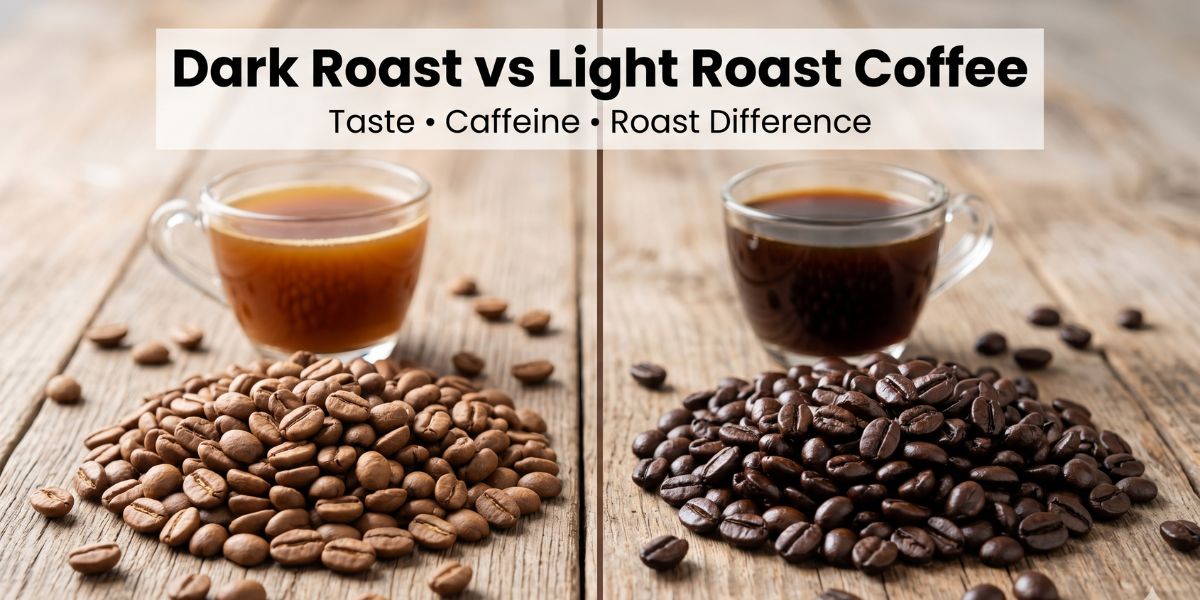
Have you ever stood in the coffee aisle at the grocery store feeling totally lost? You look at all the shiny bags. You just want a simple, good cup of coffee to start your day. But the bags have so many confusing labels! You buy a bag, take it home, and it tastes way too bitter and burnt. Or maybe it tastes sour, like weird lemon juice! It is so frustrating to waste your hard-earned money. If you want to stop guessing, you need to understand dark roast vs light roast coffee. Today, I will share the simple secrets of how beans are cooked, how they really taste, and how to pick the perfect bag for your exact morning routine.
The main difference between dark roast vs light roast coffee is the roasting time and heat. Light roasts are cooked for a shorter time, keeping bright, sweet fruit flavors. Dark roasts are cooked much longer, creating bold, smoky, and bitter flavors while hiding the bean’s natural taste.
Learning this simple fact changes everything in your kitchen. When you read the ultimate coffee guide, you learn a funny secret. A coffee bean is actually a fruit seed! The roasting fire changes how that fruit seed tastes. Let us break down the exact differences so you never buy the wrong bag of coffee again.
Key Takeaways:
-
Light beans taste like sweet fruit and tea.
-
Dark beans taste heavy, smoky, and like dark chocolate.
-
Both roasts have the exact same caffeine if you weigh them on a scale.
-
Light beans need very hot water, while dark beans brew better with cooler water.
What is the main difference between dark roast vs light roast coffee?
The main difference between dark roast vs light roast coffee is the time spent inside the hot roasting machine. Light beans come out early and stay hard and dry, while dark beans cook longer until they puff up and turn oily.
This is the very first thing you must learn. Every single coffee bean starts out green and raw. They smell like fresh grass. To make them taste good, a worker puts them into a giant, spinning hot oven. The heat changes everything. Understanding the different coffee roast levels is just like understanding how to toast bread.
If you leave bread in the toaster for just a minute, it gets a little warm and stays soft. That is a light roast. It comes out right after the bean makes its first popping sound. But if you leave the bread in the toaster for five minutes, it gets dark, crunchy, and burnt. That is a dark roast. When I first started brewing coffee, I thought the beans came from totally different trees! I did not know it was just a difference in cooking time. Light beans are a light brown color with zero oil on the outside. Dark beans are almost black and very shiny because the hot fire pushes all the natural oils to the outside.
“The roasting drum is a flavor oven. A light roast protects the original farm flavors, while a dark roast replaces the farm flavors with the heavy, smoky flavors of the fire,” explains coffee roasting expert Scott Rao.
-
The Result: Light roasts cook very fast and stay dry, while dark roasts cook much longer until they become oily and dark.
Which Roast Gives You More Caffeine?
Light roasts give you slightly more caffeine if you measure by plastic scoops, but both roasts have the exact same caffeine if you weigh the beans in grams on a kitchen scale.
There is a massive lie in the coffee world. Almost everyone thinks dark, bitter coffee gives you more energy. I believed this lie for years! I used to buy the blackest, oiliest French roast beans when I needed to study. I thought the dark color meant it was super strong. But the truth is, the roasting fire does not destroy caffeine at all. The caffeine stays perfectly safe inside the bean.
The real trick is all about size. Because dark beans cook longer, they lose their water weight and puff up like popcorn. Light beans stay very small and heavy. So, if you use a plastic spoon to measure your coffee, one scoop of tiny light beans will hold much more actual coffee than a scoop of giant dark beans. This is why learning about measuring coffee beans correctly is so important. Once I bought a cheap digital scale, my caffeine boost became perfectly equal every single morning, no matter what bag I opened.
“Caffeine is incredibly tough and survives the hot roasting process easily. The only reason people feel a difference is because they measure their coffee by volume instead of weight,” notes coffee scientist Dr. Samo Smrke.
-
The Result: Always use a kitchen scale to weigh your beans, and your caffeine kick will be exactly the same for both roasts.
How Do the Flavors Compare in Your Cup?
Light roasts taste bright, thin, and fruity like sweet tea, while dark roasts taste heavy, bitter, and smoky like rich dark chocolate.
Choosing your roast is really about choosing what kind of story you want to drink. Do you want to taste the farm where the plant grew? Or do you want to taste the fire that cooked it? Because light roasts do not stay in the oven very long, they keep their natural sugars. They are very bright and acidic. When you explore coffee flavor profiles, you find that light roasts taste like blueberries, lemons, and honey.
Dark roasts lose all those farm flavors. The hot fire burns the natural fruit sugars away. In their place, you get deep, heavy flavors like wood, smoke, and burnt caramel. I love both of them, but at different times. If I am drinking coffee black on a quiet Sunday, I want a light roast. It is like sipping a fine tea. But if I am eating a heavy breakfast with eggs and bacon, I want a dark roast. The heavy, bitter flavor cuts right through the food perfectly.
“A light roast honors the farmer by showcasing the soil and climate. A dark roast honors the roaster by showcasing the deep, caramelized transformation of the heat,” says specialty coffee buyer Tim Wendelboe.
-
The Result: Pick a light roast for sweet, fruity flavors, and pick a dark roast for bold, heavy, and smoky flavors.
Which Brewing Method is Best for Each Roast?
Light roasts taste best made as a slow pour-over with very hot water, while dark roasts taste amazing as a fast espresso shot or a classic drip coffee.
You cannot treat all beans the exact same way. If you do, your coffee will taste terrible. Because light beans are cooked for a short time, they are very hard and dense. They hold onto their flavors very tightly. To get the sweet flavors out, you have to use very hot water (around 210 degrees) and pour it slowly. A simple paper filter pour-over is perfect for this. It traps the coffee dust and makes a clean, bright cup.
Dark beans are totally different. Because they are cooked so long, they are very soft and weak. The water melts their flavors instantly! If you use super hot water on a dark roast, it will taste like dirty, bitter ash. You should use cooler water (around 195 degrees). Dark beans are amazing if you have a home coffee setup with an espresso machine. The heavy pressure makes the dark chocolate flavors shine, creating a thick, creamy drink that goes perfectly with warm milk.
“You must match your water temperature to your roast level. Hot water breaks down stubborn light roasts, but cooler water protects soft dark roasts from becoming too bitter,” advises World Brewers Cup Champion Tetsu Kasuya.
-
The Result: Brew hard light beans with a slow pour-over and hot water, and brew soft dark beans quickly with cooler water.
Frequently Asked Questions
Is dark roast coffee less acidic? Yes, dark roast coffee is much less acidic than light roast coffee. The long, hot roasting process burns away the natural organic acids found in the raw coffee cherry. This makes dark roasts much easier on a sensitive stomach.
Does light roast coffee taste sour? It can taste sour if you do not brew it right. Because it has high natural acid, using water that is too cold will fail to melt the sugars. This leaves you with a sour, lemon-like taste instead of a sweet, balanced cup.
Which roast is best for adding milk and sugar? Dark roasts are the absolute best for adding milk and sugar. Their bold, smoky, and bitter flavors are very strong. They can easily cut through the heavy milk and sweet sugar without losing their deep coffee taste.
How should I store my roasted coffee beans? Always store your best coffee beans in an airtight container at room temperature. Keep them far away from sunlight, heat, and moisture. Do not put them in the fridge, because the damp air will ruin the flavor quickly!
Final Thoughts
Figuring out the great debate between these two famous roasts is the best thing you can do for your mornings. You do not have to stand in the grocery store aisle feeling confused anymore. You finally know the simple science!
It all comes down to time and temperature. If you want a sweet, fruity drink that tastes a bit like tea, grab a light brown bag. If you want a bold, heavy, smoky cup that kicks you awake, grab the dark, oily beans. Neither one is wrong! They are just two totally different ways to enjoy the exact same magical plant. The next time you buy coffee, try grabbing a small bag of each. Brew them side-by-side in your kitchen and taste the amazing difference yourself. Happy brewing!
Leave a Reply