
Have you ever made a cup of coffee that tasted bitter and harsh, or maybe it came out sour and weak? The problem might not be your beans, and it might not be your brewing method. It could be something as simple as your water temperature.
Getting the water temperature right is one of the easiest ways to make better coffee at home. And the good news is, you don’t need fancy equipment to do it.
Why Water Temperature Matters
Coffee brewing is all about extraction, which is just a fancy word for pulling flavor out of the coffee grounds. When you get the temperature right, you extract all the good flavors like sweetness, fruit notes, and chocolate, leaving the bitterness behind.
When the water is too hot, you extract bitter compounds. Your coffee tastes burnt and flat. When the water is too cold, you don’t extract enough. Your coffee tastes sour and weak, like dirty water.
Think of it like cooking a steak. Too high heat burns the outside. Too low heat never cooks it through. The right temperature gives you a perfect result. Coffee works the same way.
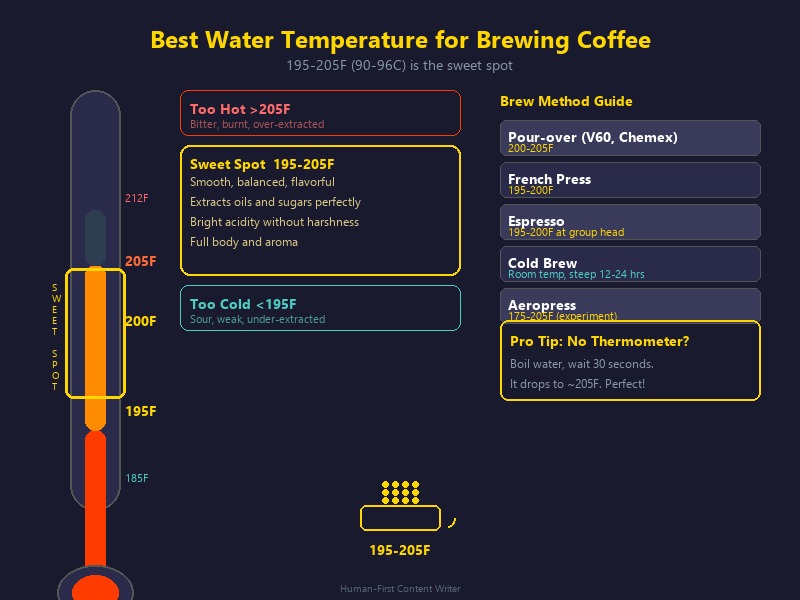
The Magic Number: 195 to 205 Degrees Fahrenheit
The Specialty Coffee Association says the ideal brewing temperature is between 195 and 205 degrees Fahrenheit. That’s about 90 to 96 degrees Celsius.
This range is the sweet spot for most brewing methods because it is hot enough to pull out the good flavors quickly but not so hot that it burns the coffee grounds and ruins the taste.
If you brew below 195 degrees, your coffee will taste under-extracted. That’s the sour, weak taste. If you brew above 205 degrees, you risk over-extraction. That’s the bitter, harsh taste.
The middle of the range, around 200 degrees, works great for most coffee drinkers.
How Temperature Affects Different Brew Methods
Not all brewing methods need the same temperature. Here is a simple guide.
Pour-over (V60, Chemex). Use water between 200 and 205 degrees since the water flows through the grounds quickly and you need higher heat to extract enough flavor. If your pour-over tastes sour, your water might be too cool.
French press. Try 195 to 200 degrees because French press coffee steeps for 4 minutes, and the longer contact time means you can use slightly cooler water to avoid bitterness.
Cold brew. This method uses room temperature water. You steep the grounds for 12 to 24 hours in the fridge. The long steep time makes up for the cool water. The result is a smooth, low-acid coffee that is easy on your stomach.
Espresso. The water at the group head should be around 195 to 200 degrees. Espresso machines are more complex, but the same rule applies. Too hot and your shot will taste burnt. Too cool and it will taste sour.
No Thermometer? No Problem
You don’t need a fancy kettle to get the right temperature. Here are some simple tricks.
The 30-second rule. Bring your water to a full boil, take it off the heat, and wait 30 seconds before pouring. By then, the water has dropped to about 205 degrees, which is perfect for most brewing methods.
The steam test. When water first boils, it releases a lot of forceful steam. After about 30 seconds off the heat, the steam feels gentler. That’s your sign that the water is ready.
Invest in a variable temperature kettle. If you drink a lot of coffee, this is worth the money because you set the exact temperature you want and the kettle heats the water and keeps it there for you. Brands like Bonavita, Stagg, and Fellow make good ones.
Common Mistakes to Avoid
A lot of people make these mistakes at home. Here is how to fix them.
Using boiling water straight off the heat. This is the most common mistake. Boiling water is 212 degrees. That is too hot for coffee. It burns the grounds and makes your coffee bitter. Always wait at least 30 seconds after boiling.
Not preheating your mug or brewer. Cold ceramic or glass steals heat from your water. Your brew temperature drops fast. Rinse your mug and brewer with hot water first. This keeps the temperature stable while you brew.
Ignoring your altitude. Water boils at lower temperatures at higher altitudes. If you live in Denver, your water boils at about 202 degrees. That means you might need to brew right away after boiling. At sea level, water boils at 212 degrees, so the 30-second wait works great.
Quick Tips for Better Coffee Tomorrow
Here is what you can try right now.
First, use the 30-second rule. Bring water to a boil, wait half a minute, then pour. That one change will improve your coffee more than anything else you can do.
Second, preheat everything including your mug, pour-over cone, and French press with a quick hot water rinse before you start brewing.
Third, experiment with different temperatures within the 195 to 205 range to see what tastes best with your favorite beans. Lighter roasts often taste better at higher temperatures, while darker roasts do well at the lower end.
Good coffee is not about expensive gear. It is about getting the basics right. Water temperature is one of those basics. Get it right, and you will never go back to drinking bitter or sour coffee again.
Leave a Reply