
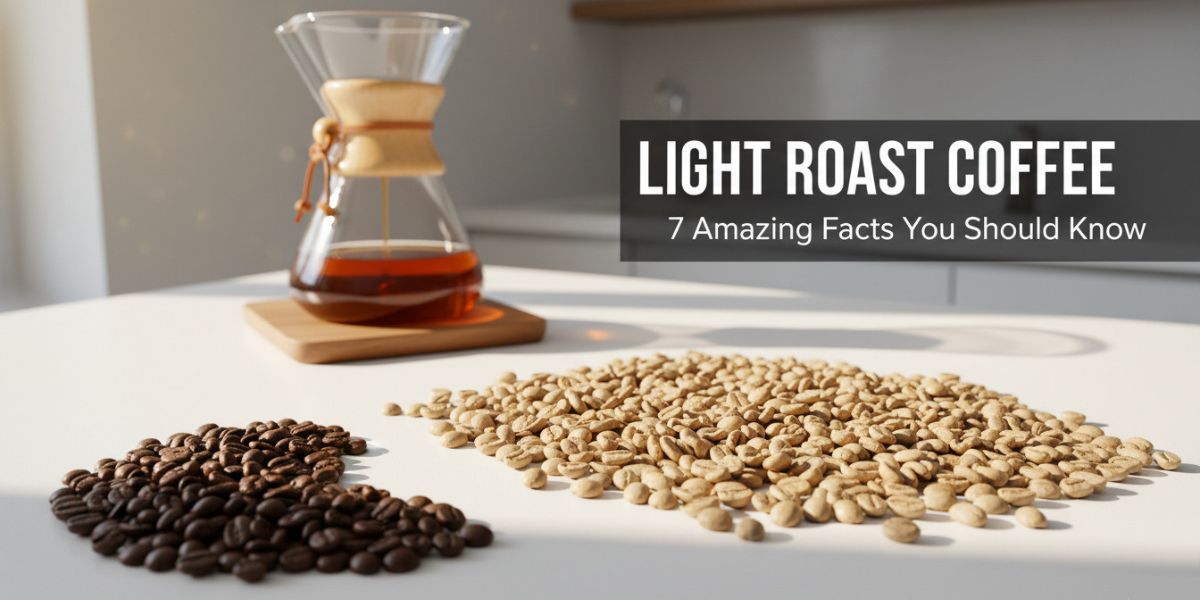
Do you ever wake up, stumble into the kitchen, and pour a cup of coffee that just tastes like burnt wood? We have all been there. You end up dumping in half a cup of milk and sugar just to make it drinkable. But what if I told you your morning cup could naturally taste like fresh blueberries, sweet citrus, or even a warm floral tea? That is the magic we are going to explore today. I will share the exact science behind these vibrant beans, my own personal journey of discovering them, and the secrets to brewing them perfectly in your own kitchen so you never have to suffer through a bitter cup again.
First, let’s get right to the point.
What is a light roast coffee?
It is a coffee bean heated for a short time at a lower temperature (350°F to 400°F), stopping right after the “first crack.” This fast process keeps the bean’s natural flavors alive, giving you a bright, fruity, and highly acidic cup with no oily surface.
Understanding what is a light roast coffee is the very first step in completely changing how you view your morning routine. When you dive into the ultimate coffee guide, you quickly learn a beautiful secret: coffee is actually a fruit. Light roasting treats the bean like the delicate fruit seed it is, preserving the natural sugars and organic acids that develop in the farm’s soil.
Key Takeaways:
-
A light roast coffee stops roasting right after the “first crack” at temperatures around 350°F to 400°F.
-
It features a bright, crisp, and fruity flavor profile rather than a smoky or bitter one.
-
The beans are dense, dry, and totally lack the oily surface you see on darker roasts.
-
You need much hotter brewing water to properly pull out those sweet, natural flavors.
What Does Light Roast Coffee Taste Like?
Light roast coffee tastes bright, crisp, and highly acidic, featuring complex natural flavors like berries, sweet citrus, herbs, and floral notes instead of the smoky, woody, or bitter flavors found in darker roasts.
I still remember the exact moment my coffee world flipped upside down. I walked into a small specialty cafe and ordered a pour-over of an Ethiopian Yirgacheffe. Honestly, I expected it to taste like the muddy diner coffee I grew up with. Instead, the barista handed me a cup that smelled like a warm fruit basket. When I took my first sip, it tasted exactly like a sweet, bright blueberry tea. There was no ash, no smoke, and absolutely no need for cream.
When you drink this type of coffee, you are actually tasting the “terroir.” That is a fancy word for the soil, altitude, and climate where the coffee cherry grew. Because the bean spends less time burning in the roaster, those complex, fruity flavors survive the heat. If you look at different coffee flavor profiles, you will instantly see that lighter roasts always dominate the fruit and flower categories. They are vibrant and alive.
“Light roasting is about total transparency. We are trying to showcase the farmer’s hard work and the exact soil the coffee grew in, rather than the taste of our industrial roasting machine,” says specialty coffee pioneer George Howell.
-
The Result: You get a sweet, tea-like, fruit-forward cup that lets you taste the bean’s true home and natural sugars.
Does Light Roast Have More Caffeine?
By volume (scoops), light roast coffee has slightly more caffeine because the beans are denser, but by weight (grams), light and dark roasts contain roughly the exact same amount of caffeine.
For the longest time, I believed a massive myth. I thought a light roast was like a weak tea that wouldn’t wake me up, and I needed a shiny, black French roast to get my engine going. Here is the simple truth I learned: the caffeine molecule is incredibly tough. It does not burn off during the roasting process.
The confusion comes down to how we measure our mornings. Because dark roasts sit in the heat longer, they lose water weight and puff up like popcorn. Light beans stay small and tightly packed. I used to use a plastic scoop for my coffee. A scoop of those small, dense light beans naturally held more actual coffee material than a scoop of large, puffy dark beans. Once I figured this out, I bought a cheap digital scale for my kitchen. Using proper coffee measuring tools completely solved the mystery for me. Now, I weigh my morning dose in grams, ensuring my caffeine kick is exactly the same every single day.
“The caffeine molecule is incredibly stable. The roasting process doesn’t burn it off at all. The difference in your morning cup comes down entirely to how you measure your beans,” explains coffee scientist Dr. Samo Smrke.
-
The Result: Weigh your beans with a digital scale instead of a scoop, and your caffeine boost will stay perfectly balanced.
How Is Light Roast Coffee Made? (The Roasting Process)
Light roast coffee is made by heating raw green coffee beans to an internal temperature of 350°F to 400°F, stopping the roast immediately after the beans expand and make a loud popping sound known as the “first crack.”
To really understand this, I decided to visit a local roaster. Standing next to a massive, spinning hot drum, the smell was unbelievable. The roastmaster explained that the process is a very delicate dance with time. Raw green beans go into the drum, absorb heat, and start to dry out. As the water inside turns to steam, pressure builds up until the bean physically bursts open.
Suddenly, I heard it. It sounded exactly like popcorn popping in a microwave. “That is the first crack,” the roaster yelled over the noise. This is the ultimate make-or-break moment. To create a light roast, he had to pull the beans out and cool them instantly. Because he removed them from the heat so fast, the natural oils stayed trapped deep inside the seed. That is why the beans look so dry and matte in the bag. Watching him work made me realize how fast things happen. If you ever try home coffee roasting, you will quickly see how a light roast turns into a medium roast if you blink at the wrong time!
“Hitting the cooling tray right after the first crack finishes is crucial. Even ten extra seconds of heat can completely mute those delicate, origin-specific enzymatic notes,” notes roasting expert and author Scott Rao.
-
The Result: A fast, lower-temperature roast stops at the very first pop, keeping the beans dense and packed full of natural farm flavors.
What is the Best Way to Brew Light Roast Coffee?
The best way to brew light roast coffee is using the pour-over method (like a V60 or Chemex) with water heated between 205°F and 212°F to properly extract its dense, complex flavors.
I will admit, when I brought my very first bag of fancy light roast home, I completely ruined it. I tossed it into my cheap auto-drip machine and ended up with a weak, sour mess. I didn’t realize that because these beans are roasted for a shorter time, they are physically much harder. They act like a tightly closed fist. You have to work a little harder to convince them to let go of their flavors.
You need very hot water—literally right off the boil—to break down those dense cell walls and melt the sugars. I finally switched to a simple gooseneck kettle and a paper-filter pour-over setup. It changed my life. The paper filter traps the heavy oils and tiny coffee dust, allowing the bright, clear, fruity notes to shine through perfectly. Taking the time to master a simple pour-over brewing guide is the single best favor you can do for your taste buds.
“Because light roasted coffee is less porous, it demands hotter water and more agitation to pull out the sweetness. If you under-extract, it will just taste sour and salty,” advises World Brewers Cup Champion Tetsu Kasuya.
-
The Result: Use near-boiling water and a paper pour-over cone to unlock the sweet, hidden magic inside these dense beans.
Why Should You Choose a Light Roast Over a Dark Roast?
You should choose a light roast over a dark roast if you want to taste the unique, natural flavors of the coffee’s origin—like Ethiopian blueberry or Colombian sweet citrus—rather than the heavy, smoky flavors of the roasting machine.
For years, I was a die-hard dark roast loyalist. I thought coffee was supposed to punch me in the mouth with heavy, chocolatey bitterness. But choosing your roast level is really about deciding what story you want your drink to tell. Do you want to taste the farm, or do you want to taste the fire?
Dark roasts are cooked so long that the original flavor of the fruit is literally burned away. It is replaced by the carbon, smoke, and woody notes created by the hot roasting drum. Light roasts do the exact opposite. They are a clear window into the farm. Whenever I want a comforting, heavy drink loaded with milk, I might still grab a dark roast. But when I want an adventure, a lighter roast is my only choice. It is the only way to truly explore single origin coffee beans and taste how a rainy season in Kenya makes a bean taste completely different from one grown on a mountain in Peru.
“Choosing a light roast is choosing to taste the agriculture. It connects you directly to the soil, the high altitude, and the hard-working farmer who grew the cherry,” says famous specialty coffee buyer Tim Wendelboe.
-
The Result: Pick a light roast to experience a wild, natural fruit journey around the world instead of drinking smoky, burnt bitterness.
Common Mistakes When Brewing Light Roast Beans
The most common mistakes when brewing light roast beans are using water that is too cool, grinding the beans too coarsely, and under-extracting the coffee, which leaves the final cup tasting like sour lemon juice.
Let me save you from the frustrating phase I went through. As I mentioned earlier, brewing this type of coffee can be tricky if you are used to dark, oily beans. A lot of my friends buy a beautiful bag of light roast coffee, brew it at home, and text me saying, “Why does this taste like sour vinegar?”
This happens because they did not extract enough of the natural sugars to balance the bright, fruity acid. I used to do the exact same thing. I was using 195°F water and a chunky, coarse grind. Because the beans are so tightly packed, that cool water just slipped right past them without pulling out the good stuff. Once I bumped my kettle temperature up to 210°F and used a finer, sand-like setting on my coffee grind size chart, the magic happened. The hot water finally melted the sugars, giving me a perfectly balanced, incredibly sweet morning cup.
“Under-extracted light roasts are notoriously sour. Do not be afraid to push your extraction with hotter water and a finer grind to reach that beautiful sweet spot,” recommends professional barista and educator Lance Hedrick.
-
The Result: Grind your beans a little finer and use water right off the boil to guarantee a sweet, delicious cup every time.
Frequently Asked Questions
Is light roast coffee less bitter? Yes, light roast coffee is significantly less bitter than dark roasts. Because it is roasted for a shorter time, the beans retain their natural sweet, fruity acidity instead of developing the harsh, ashy flavors caused by prolonged heat.
Is light roast coffee good for espresso? While possible, brewing light roast coffee as espresso is tricky. Its dense structure and high acidity often result in a sour shot. It requires a very fine grind, a longer pull time, and much hotter water to extract the sugars properly.
Why does my light roast coffee taste sour? Your light roast coffee likely tastes sour due to under-extraction. These dense beans require hotter water (205°F–212°F) and a finer grind size to dissolve the natural sugars. Cool water only pulls out the surface acids, skipping the sweetness.
How should I store light roast coffee beans? Store your light roast coffee beans in an airtight, opaque container at room temperature. Keep them away from direct sunlight, heat, and moisture to preserve those delicate, origin-specific fruit and floral flavor notes for as long as possible.
Final Thoughts: Ready to Change Your Morning Routine?
At the end of the day, switching to a light roast coffee is about so much more than just getting a quick caffeine fix. It is an invitation to finally taste coffee the way it was meant to be experienced—as a vibrant, sweet, and complex fruit.
If you have spent years hiding the bitter taste of dark roasts behind heavy creams and flavored syrups, I highly encourage you to take the leap. Grab a bag of freshly roasted Ethiopian or Colombian beans from a local specialty shop. Just remember the golden rules we talked about: use a digital scale, grab a paper-filter pour-over, use water right off the boil, and grind a little finer than you think you need to.
The very first time you brew a cup that naturally tastes like blueberries and honey, without adding a single pinch of sugar, I promise your mornings will never be the same. The world of coffee is massive, beautiful, and deeply connected to the farmers who grow it. So, put down the burnt beans, fire up your kettle, and start tasting the adventure!
Happy brewing!
Leave a Reply