
You’ve been at this espresso thing for a while. You bought the machine – maybe a Gaggia Classic Pro, maybe a Rancilio Silvia. You watched the YouTube videos, bought the WDT tool, the calibrated tamper, the dosing funnel. You’re doing everything “right.”
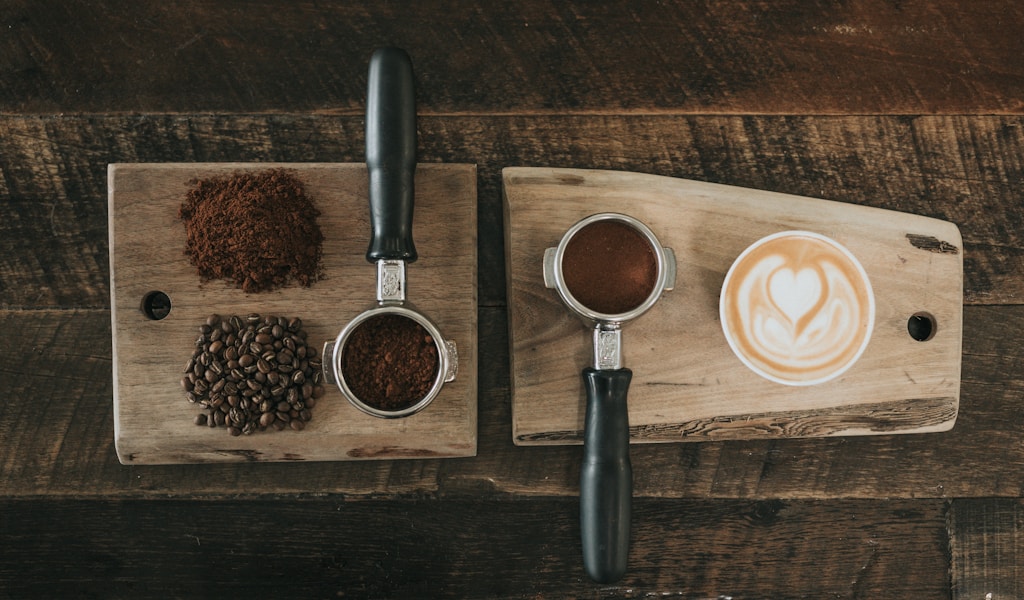
And yet. Monday’s shot runs 18g in, 36g out in 28 seconds – glorious. Tuesday, same beans, same prep, it gushes 50g in 19 seconds and tastes like battery acid. Wednesday it chokes entirely. You’re burning through a $22 bag of Ethiopian single-origin and getting maybe three drinkable shots from the whole thing.
Your partner gives you that look. The one that silently asks how much did this hobby cost again? You start wondering if maybe you just don’t have the touch. Maybe espresso is for other people.
It’s not you. It’s your grinder.
The Eureka Mignon Notte – sold as the Manuale in Europe and the UK – is what happens when you let the bottleneck go. 50mm flat burrs. Stepless adjustment. Built in Florence, Italy, by a company making commercial cafe grinders for over a century. Under $350, and the grind quality has no business being this good at this price.
If your shots are inconsistent and you’re ready to stop guessing, this is where the upgrade starts.
What Makes It Italian: The Engineering That Matters
Eureka isn’t a startup. They’ve manufactured grinders in Florence since 1920, and their commercial line sits on cafe counters across Europe. The Mignon Notte shrinks that DNA into a home-friendly package without cutting the parts that affect your espresso.
50mm Flat Steel Burrs at 1,350 RPM
The burrs are the only thing that touches your coffee, and these are the right kind: flat, hardened steel, 50mm diameter. Flat burrs produce more uniform particle distribution than conical burrs at this price. In plain English: fewer boulders, fewer fines, fewer channels in your puck.
The motor spins them at 1,350 RPM – deliberately slow. Compare that to the Baratza Sette 270, which screams at higher speeds. Slower rotation means less friction heat transferred to your grounds. Heat kills volatile aromatics. You pay extra for those tasting notes; a slow grinder preserves them.
These burrs are rated for 300-500 kg of coffee before replacement. At 2 shots a day, 18g each, that’s over 20 years. Your espresso machine will die before these burrs do.
Stepless Adjustment: Infinite Control, Zero Clicks
This is what separates serious espresso grinders from everything else – and the main reason the Notte dominates its price bracket.
A stepped grinder locks you into pre-set “clicks.” One click is too coarse – your shot gushes. The next click finer chokes the machine. Stepless means you turn a knob and the burrs move continuously. No steps, no compromises. If your shot runs 5 seconds too fast, you nudge the dial a millimeter finer. The resolution is limited only by your fingertips.
The trade-off – and we’ll come back to this in the cons – is that the dial has zero markings. No numbers, no lines, nothing. You’re navigating by feel and memory. It works once you’re used to it, but the first week is humbling.
Sound-Insulated and Compact Enough to Stay
The Notte’s chassis is metal – mostly cast aluminum – and Eureka lined the interior with sound-dampening material. At roughly 70-75 dB while grinding, you can hold a conversation next to it. My partner sleeps through it one room over at 6 AM. The Sette 270, by comparison, hits 85-90 dB and sounds like a garbage disposal eating a bag of screws.
It’s 12 cm (4.7 inches) wide and 34 cm tall with the hopper. It slides under most kitchen cabinets. On a crowded counter next to an espresso machine, scale, and knock box, every centimeter counts – and the Notte doesn’t hog space.
Setup, Seasoning, and the Retention Reality
Out of the box, the first thing you notice is the weight. At 7 kg (15.4 lbs), the Notte has a density cheap grinders can’t fake. It doesn’t slide around your counter. The portafilter fork is plastic and mildly annoying – we’ll get to that – but the body inspires immediate confidence.

Burr alignment out of the box is generally good. Eureka’s manufacturing tolerances are tight enough that most units don’t need shimming. Do the marker test if you want peace of mind, but you probably won’t find anything to fix.
Now, retention – the one thing every single-dosing obsessive will ask about.
Fresh out of the box, the Notte holds onto 1.5-2 grams inside the grind chamber. That’s exchange retention – old grounds swapping with new ones each dose. If you’re single-dosing, your first shot contains yesterday’s stale grinds. Not ideal.
Two things fix this. First, after 2-3 kg of seasoning (a month or two of daily use), the burrs and chamber “fill in” their microscopic gaps. Retention drops to 0.5-0.8 grams. Second, a $15 aftermarket bellows hopper – available from a dozen Etsy and Amazon sellers – puffs retained grounds out after each dose. With bellows, retention drops to 0.1-0.3 grams. That’s single-dose territory.
If you’re a hopper user who fills 250g at a time and grinds on demand, retention barely matters. The exchange grounds are the same beans. But for single-dosers: budget the extra $15 for bellows. You’ll want them.
Real-World Performance: Three Months on the Counter
Espresso Grind Consistency
This is where the Notte earns its keep – and why I recommend it to anyone stuck on a Breville built-in grinder.
The flat burrs produce grounds that are visibly fluffy – no clumps, no static spraying across your counter. I still WDT out of habit, but shots pulled without it show far fewer visible channels than anything from a stepped conical grinder at this price. Particle distribution is tight enough that extraction is consistent and predictable. Change one variable – grind size – and the shot time moves exactly how you’d expect. That predictability is what makes dialing in stop feeling like gambling.
Across medium to medium-dark roasts (your classic espresso blends), the Notte produces rich body, balanced sweetness, and clean finish. Light roasts push it harder – you’ll grind finer, shots run longer, and the burrs cope – but this isn’t the grinder I’d pick if 90% of your beans are Nordic-roast single origins. Those benefit from larger or unimodal burr geometries. For espresso blends, Italian roasts, and medium-roast singles that most home baristas actually drink, the Notte sits dead center in its sweet spot.
The Dial-In Experience
First dial-in from zero takes about 3 to 4 shots. Shot one finds the ballpark. Shot two corrects. Shot three is drinkable. Shot four is dialed. After that, daily adjustments are tiny – a millimeter turn for bean aging, humidity, or a new bag.
The stepless knob is stiff enough that it doesn’t drift from vibration – the setting holds for weeks without creeping. But the lack of markings means cleaning the burrs resets you to zero. Pro tip: use a white paint marker to mark your espresso range on the dial. It’s an $8 fix for the grinder’s most glaring ergonomic flaw.
Noise: The 6 AM Test
I measured the Notte at 72 dB at ear distance while grinding a medium-roast 18g dose. For context:
- Baratza Sette 270: ~88-90 dB (conversation-stopping loud)
- DF64 (stock): ~78-82 dB
- Eureka Mignon Notte: ~70-75 dB
- Niche Zero: ~68-72 dB
At 72 dB, you can talk over it. You won’t wake a sleeping toddler in the next room. It’s a low hum, not a high whine. The sound dampening inside the case isn’t just marketing copy – it actually works.
Grind Speed
At espresso-fine settings, the Notte grinds 1.8-2.2 grams per second. An 18g dose takes about 9-10 seconds. The Sette 270 can do it in 5-6 seconds, but 10 seconds of quiet grinding beats 5 seconds of ear-splitting noise. You’ll spend more time puck-prepping than grinding either way.
Who the Eureka Mignon Notte Is For (and Who It Isn’t)
Let me be blunt, because too many reviews try to sell every product to everyone:
Buy the Notte if:
- You make espresso 90%+ of the time and rarely touch filter coffee.
- You’re upgrading from a built-in grinder (Breville Barista Express, Breville Oracle) or an entry-level stepped grinder (Baratza Encore, Breville Smart Grinder Pro).
- You value build quality and longevity over digital screens and timers.
- You want a grinder that stays on your counter for a decade, not two years.
- You have a proper espresso machine with an unpressurized basket and you’re ready to treat grinding as seriously as brewing.
Skip the Notte if:

- You switch between espresso and pour-over daily. The stepless adjustment makes going back and forth a nightmare – you’ll lose your espresso setting and spend 10 minutes finding it again.
- You want an out-of-the-box single-dose workflow. The Notte can do single dosing with mods, but it was designed as a hopper grinder.
- You need precise, repeatable settings with numbers. The blank dial is a legitimate dealbreaker for some people, and I won’t pretend otherwise.
- You primarily brew filter coffee. Get a Fellow Ode Gen 2 or a Baratza Virtuoso+. The Notte is an espresso grinder first, second, and third.
Honest Cons: What Bothers Me After 3 Months
No product is perfect, and the Notte’s flaws are real enough that you should know about them before spending $330.
The Stepless Dial Has No Markings. Zero.
I mentioned this earlier but it deserves its own heading because it’s the single biggest frustration. There’s a small red dot on the knob and another on the body – that’s your entire reference system. Rotate the dial more than one full turn to clean the burrs or switch roasts, and you have absolutely no idea where you were.
The workaround is an $8 paint marker. Two minutes of effort. But should you have to modify a $330 grinder to make it usable? No. Eureka could print numbers on the dial for pennies. The fact that they haven’t is stubbornness dressed as minimalism.
The Plastic Hopper Feels Cheap
The hopper is functional plastic on a mostly-metal grinder. The gate at the bottom – the sliding door for removing the hopper without emptying beans – works about 80% of the time. The other 20%, it sticks halfway and you spill beans. Not a dealbreaker, but the kind of corner-cutting that reminds you this isn’t a $700 grinder.
No Timer, No Scale, No Dose Control
The Notte has exactly one mode: hold the button, it grinds. Release, it stops. No programmable timer, no weight-based dosing, no display. The Mignon Specialita has a digital timer with 0.1-second precision. The Notte has your thumb.
In practice, you need a separate scale. Weigh your portafilter, grind until close, weigh again, adjust. After a few weeks you develop timing intuition – “about 10 seconds for 18 grams” – but you’ll never hit exactly 18.0g by feel. For push-button consistency, step up to the Specialita.
The Portafilter Fork Isn’t Great
The metal forks that hold your portafilter are functional but flimsy. A 58mm bottomless portafilter doesn’t sit securely without you holding it. I’ve had mine tip forward and dump grounds twice. The fix is simple – hold the portafilter, it’s 10 seconds – but a $5 design tweak could eliminate the problem entirely.
Retention Without Mods
Covered in the setup section above: 1.5-2g fresh out of the box, settling to 0.5-0.8g after seasoning. Hopper users won’t care. Single-dosers should budget the $15 bellows hopper – most owners buy one within the first month.
Eureka Mignon Notte vs. The Competition
Three grinders get compared to the Notte constantly: the Baratza Sette 270, the DF64, and (strangely) the Fellow Ode. Let’s sort them out.
| Feature | Eureka Notte | Baratza Sette 270 | DF64 (Gen 2) | Fellow Ode Gen 2 |
|---|---|---|---|---|
| Price | ~$330 | ~$400 | ~$400 | ~$345 |
| Burr Type | 50mm Flat Steel | 40mm Conical Steel | 64mm Flat Steel | 64mm Flat Steel |
| Adjustment | Stepless | 30 Macro + Stepless Micro | Stepless | Stepped (33 settings) |
| RPM | 1,350 | ~2,000+ | ~1,400 | ~1,400 |
| Noise | ~72 dB (Quiet) | ~88 dB (Loud) | ~80 dB (Moderate) | ~75 dB (Quiet) |
| Timer/Dosing | None | Digital Timer (0.01s) | None (single-dose) | Digital Timer |
| Espresso Capable | Yes – designed for it | Yes – excellent | Yes – with mods | No – filter only |
| Single Dose Ready | With mods | With mods | Yes, built for it | Yes |
| Weight | 7 kg / 15.4 lbs | 3.2 kg / 7 lbs | 6.8 kg / 15 lbs | 4.6 kg / 10.1 lbs |
Eureka Mignon Notte vs. Baratza Sette 270
The Sette 270 has been the default “first serious espresso grinder” recommendation for years. Its 40mm conical burrs grind fast (5-6 seconds for 18g), and the digital timer with 0.01-second resolution gives repeatable dosing the Notte can’t match without a separate scale.
But the Sette is loud – conversation-killingly loud. It’s built mostly from plastic and has a documented history of gearbox failures. Baratza’s customer service is excellent and they’ll ship replacement parts, but the Notte’s metal construction feels like it’ll outlast the Sette by a decade.
Pick the Sette 270 if programmable timed dosing matters more than noise and build. Pick the Notte if you want a quieter, metal grinder that’ll outlast your machine – and you don’t mind weighing manually.
Eureka Mignon Notte vs. DF64 (Gen 2)
The DF64 is the single-dosing champion in this price range. Out of the box, it’s built for weighing beans, dumping them in, grinding, and getting everything back – integrated bellows, working declumper, and 64mm flat burrs that leave room for SSP upgrades later.

But the DF64 costs about $70-100 more, its stock burrs need alignment more often, and its workflow is single-dose-or-nothing. If you want to fill a hopper and grind on demand for a week, the DF64 can’t do it. The Notte is a traditional, hopper-first grinder adaptable to single dosing. The DF64 is a single-dose grinder that can’t be adapted to hopper use.
Pick the DF64 if single dosing is non-negotiable and you might upgrade burrs later. Pick the Notte if you want a traditional workflow, lower noise, and Italian build consistency at a lower price.
Eureka Mignon Notte vs. Fellow Ode Gen 2
This comparison shouldn’t exist, but it comes up constantly because both cost roughly the same. Let me be clear: the Fellow Ode Gen 2 is not an espresso grinder. Its stepped adjustment lacks the resolution for espresso dial-in. Its motor isn’t built for the torque requirements of grinding fine enough for unpressurized baskets. Even with SSP burrs, the Ode struggles in true espresso range.
The Ode is a phenomenal filter grinder – maybe the best under $400 for pour-over and drip. But for espresso, it’s not in the same conversation. If you need both brew methods, buy two grinders or look at the DF64 with burr swaps. Don’t try to make the Ode do something it wasn’t designed for.
Frequently Asked Questions
Is the Eureka Mignon Notte good for espresso?
Yes. It’s designed specifically for espresso. The 50mm flat steel burrs, stepless adjustment, and low RPM motor are all optimized for the fine grind range that espresso demands. This isn’t a general-purpose grinder that happens to go fine enough – espresso is its reason for existing.
Can the Notte grind for pour-over or French press?
Technically yes – rotate the dial several full turns coarser and it’ll produce filter-range grounds. But switching back and forth is impractical; you lose your espresso setting and have to re-dial from scratch. If you need one grinder for both brew methods, buy two grinders or look at a stepped option like the Sette 270.
What’s the difference between the Mignon Notte and the Mignon Manuale?
Same grinder. “Manuale” is the name used in Europe, the UK, and most international markets. “Notte” is the US-market name, sold through Seattle Coffee Gear. Same burrs, same motor, same chassis. Every review or forum post about the Manuale applies to the Notte.
How does the Notte compare to the Mignon Specialita or Silenzio?
The Notte, Silenzio, and Specialita share the same 50mm flat burrs and stepless adjustment. The differences are features, not grind quality:
- Silenzio (~$480): Adds a programmable timer, improved sound insulation (hence the name), and a metal portafilter fork. Quieter than the Notte by about 5-8 dB.
- Specialita (~$650): Adds a digital touchscreen with 0.1-second timer precision, 55mm burrs (slightly faster grinding), and the quietest operation in the Mignon line.
If you want the best grind quality per dollar, get the Notte. If you want hands-free timed dosing and quieter operation, step up to the Specialita. The Silenzio sits in an awkward middle – $150 more than the Notte for a timer less precise than the Specialita’s digital display.
Do I need to align the burrs out of the box?
Probably not. Eureka’s factory alignment is better than most grinders at this price. Unless you’re chasing extraction yields above 24% and inspecting pucks with a microscope, factory alignment is good enough for excellent espresso. The marker test is free for peace of mind, but you’re unlikely to find a problem worth fixing.
How long do the burrs last?
Eureka rates the hardened steel burrs for 300-500 kg of coffee. At 2 doubles per day (36g), that’s 23-38 years. Motor brushes will need replacement before the burrs do – and even that is a 10-15 year timeline. Commercial-grade components in a home-sized package.
What mods or accessories should I budget for?
Three things make the Notte significantly better:
- Single-dose hopper with bellows (~$15-25 on Etsy/Amazon). Cuts retention from ~0.8g to ~0.2g. Essential if you single-dose.
- Paint marker or dial indicator sticker (~$5-8). Mark your espresso range so you’re not flying blind. You can find custom dial face stickers designed specifically for the Mignon line.
- Dosing funnel (~$10-15). The Notte’s portafilter fork isn’t great at containing stray grounds. A magnetic dosing funnel on your portafilter catches everything.
The Verdict: Best Espresso Grinder Under $350
Here’s what matters: the Eureka Mignon Notte produces espresso grinds that are genuinely excellent – not “excellent for the price,” not “excellent considering the compromises” – just excellent. Flat burrs deliver uniformity that conical grinders at this price can’t match. Stepless adjustment lets you dial in with surgical precision. The motor runs slow and cool enough that your $22 single-origin beans taste like they’re supposed to.
Here’s what also matters: the dial has no markings. The hopper feels like it came from a cheaper product. There’s no timer, no scale, no display. You’ll hold your portafilter because the fork won’t. And if you want to single-dose, budget $15 for an aftermarket hopper within the first month.
Those flaws are real. But they’re ergonomic flaws – not grind-quality flaws. Every dollar Eureka saved by skipping a digital display and printed markings went into the burrs, motor, and chassis. In espresso, grind quality is the only thing that touches your cup. A timer and a pretty dial won’t fix channeling. Flat, aligned, slow-spinning steel burrs will.
If you’re upgrading from a Breville built-in grinder or an entry-level stepped grinder, the Notte will change your espresso more than any machine upgrade at twice the price. The jump from “inconsistent and frustrating” to “predictable and delicious” starts here.
The Eureka Mignon Notte is the best espresso grinder under $350. Not the best value. Not the best for the money. The best, full stop.
BeanSage is reader-supported. When you buy through links on our site, we may earn an affiliate commission at no extra cost to you. Our recommendations are based on hands-on testing and research – never on who pays us.
Affiliate Disclosure: As an Amazon Associate, beansage.com earns from qualifying purchases. When you buy through our links, we may earn a commission at no extra cost to you. We only recommend products we stand behind.
Leave a Reply