
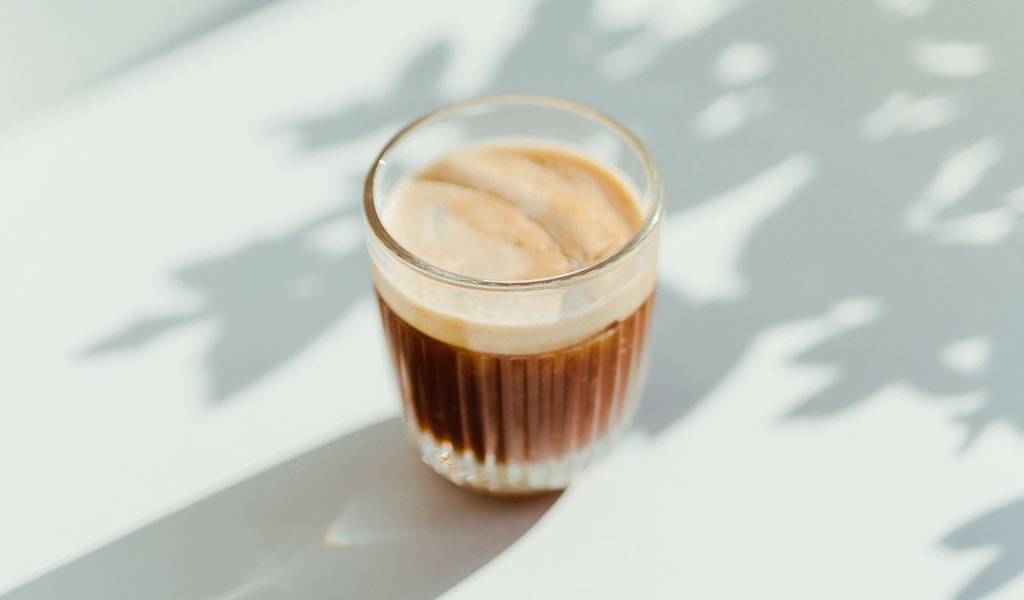
BeansAge Verdict: The Gaggia Classic Pro is the entry-level machine for people who don’t want an entry-level machine. Commercial-grade internals in a sub-$550 body. No touchscreens, no automated milk frothing, no hand-holding. Just rocker switches, a 58mm portafilter, and espresso that can go toe-to-toe with machines costing twice as much – if you’re willing to learn the craft.

Rating: 4.4/5 | Price: $449-$549 (check current price on Amazon) | Best for: Hobbyists, tinkerers, and beginners who want to grow into real espresso – not outgrow a toy in 6 months.
The Problem: Most “Beginner” Espresso Machines Set You Up to Fail
You buy a $200 machine. Pressurized portafilter. Plastic housing. A “frother” wand that’s a plastic sleeve blowing hot air. Your first shots are fine – better than a Keurig. For about three weeks.
Then you taste real espresso at a specialty café. Body. Sweetness. Texture that coats your tongue. You go home and realize: your machine can’t get better. That pressurized basket hides every mistake. You never actually learn. Six months later, you’re back shopping and your $200 machine is gathering dust.
Two machines. Double the spend. You still haven’t pulled a great shot. The “affordable starter” trap is real, and it’s expensive.
The Solution: Buy Something That Doesn’t Expire
The Gaggia Classic Pro flips the script. Instead of a machine designed to impress you on day one and disappoint you by month three, it’s built on a stubborn philosophy: give the home user the same core components found in commercial machines, strip away the fluff, and let them grow into it.
No automated menus. No built-in grinder. No touchscreen. Just a 58mm commercial portafilter, a 3-way solenoid valve, a proper steam wand, and a steel housing built in Milan that weighs 20 pounds and feels like it’ll outlast your kitchen. The catch? You have to learn. For the right person, that’s the entire point.
What Makes the Gaggia Classic Pro Special
Walk into any specialty coffee shop. That La Marzocco or Synesso on the counter has three things: a 58mm portafilter, a 3-way solenoid valve, and a commercial steam wand. These aren’t luxury flourishes – they’re the non-negotiables of proper espresso. The Gaggia Classic Pro has all three at one-third to one-fifth the price.
The 58mm Commercial Portafilter
This is the industry standard. Every precision basket, competition tamper, and dosing funnel in existence is built around 58mm. A wider, shallower puck extracts more evenly than a narrow, tall one – the water has less distance to travel through the coffee bed. Fewer channels. Fewer dry spots. Fewer sour-bitter disasters. It’s physics, not marketing.
Plus, your accessories follow you. Upgrade to a Rancilio Silvia or ECM later? Your tamper, baskets, and bottomless portafilter all still work. The Breville Bambino Plus uses 54mm. Most budget machines use 51mm or smaller. Those accessories become paperweights when you upgrade.
The 3-Way Solenoid Valve
When the pump stops, a 3-way solenoid instantly releases pressure from the group head. Dry, solid pucks that knock out cleanly instead of soupy mud. It also means you can backflush with cleaning detergent – run Cafiza through the group head internals weekly to dissolve coffee oils before they build up. Machines without a solenoid (including the base-model Breville Bambino) can’t backflush. They slowly choke on their own residue.
The Commercial Steam Wand
The Classic Pro ditched the old panarello wand for a proper stainless steel commercial wand with a single-hole tip. This puts you in control of microfoam texture – not a plastic sleeve that mechanically injects air. It takes practice, but once you nail it, you’re making silky microfoam that rivals any café and actually tastes sweet instead of like hot bubbles.
Italian Build, Milan-Made
Manufactured in Milan, Italy. Parts availability spanning decades. Inside the steel housing: an aluminum boiler with non-stick coating on newer models, an Ulka vibratory pump (same brand used in Rancilio and ECM machines), and three rocker switches – power, brew, steam. No circuit boards to fail. No firmware bugs. No planned obsolescence. Built to be repaired, not replaced.
Setup & First Impressions
Unboxing is an experience in weight. At 20 pounds, it lands on your counter with authority. Brushed stainless steel (available in Stainless, Cherry Red, Classic Blue, Industrial Grey, Thunder Black). No flex. No creaks. The portafilter is chrome-plated brass – heavy, cold, unmistakably commercial.

It looks old-school in the best way – this design hasn’t changed much since 1991 because it works. Rocker switches. A brew pressure gauge on the front. A steam knob with satisfying resistance. No LCD screens. No beeping. No cleaning cycle reminders.
Setup takes 10 minutes. Fill the 72-ounce reservoir, prime the pump, run water through the group and wand. Done. But here’s your first lesson: this machine needs 15-20 minutes to properly heat up. Not just the boiler (ready in 5-6 minutes), but the portafilter and group head. Thermal mass matters. Hot portafilter = stable shot temperature. Cold portafilter = sour espresso and confusion.
Key Features Explained
Brass Group Head (Evo Pro / E24 Models)
Current models use a brass group head that threads directly into the boiler – excellent thermal transfer. When the boiler is hot, the group is hot. The heavy brass acts as a heat sink, smoothing out the aluminum boiler’s natural temperature swings. Fluctuate more than 2-3°F during a shot and you’ll taste it. The brass group head is your defense against that.
The 9-Bar OPV Mod – Why Everyone Does It
Out of the box, the OPV is set to 12-14 bar. Proper espresso extraction happens at 9 bar. The higher factory setting was tuned for pressurized baskets and pre-ground coffee – not the fresh, properly-ground beans you should be using.
On current Evo Pro and E24 models, the fix is absurdly simple. Buy a 9-bar spring kit for under $15. Swap takes 10 minutes with a screwdriver. No cutting. Fully reversible. The difference after the mod is night and day – channeling drops, bitterness drops, sweetness and clarity jump. If you do one thing to this machine, do this.
Browse OPV mod kits on Amazon →
Steaming Reality
The boiler is small (3.5 oz capacity). Switching from brew to steam temperature takes 30-45 seconds. Workflow: pull shot first, hit steam switch, wait, purge condensation, then steam. For one or two lattes in the morning, it’s completely fine. For back-to-back milk drinks for guests, you’ll feel the limitation.
After steaming, you must refill the boiler by running the brew switch until water flows from the group. Skip this and your next shot will be superheated and sputtering. It becomes second nature, but it’s a Gaggia quirk you’ll need to learn.
Real-World Performance
Espresso Shot Quality
When you nail the variables – fresh beans, real espresso grinder, proper dose, level tamp, 9-bar pressure, hot group head – the Gaggia produces espresso that embarrasses most mid-tier cafés. Tiger-striped crema. Body that coats the spoon. Distinct flavor notes: chocolate, stone fruit, caramel depending on the bean. Not just “strong coffee.”
But the Gaggia does not forgive laziness. Grind off by two clicks? You’ll taste it. Cold portafilter? Sour shot. Dosed 17g instead of 18g? Watery and fast. Because there’s no PID, you’ll learn temperature surfing: start your shot when the brew light first comes on (peak of the heating cycle), not after it’s been sitting idle. This becomes muscle memory after a few weeks.
The Learning Curve Reality
Week one: humbling. Fast shots, sour shots, milk that screeches. You’ll watch YouTube at 1 AM wondering why your puck looks like a mudslide. This is normal. Week two: grind size sweet spot found. Shots start flowing right. Week three: temperature surfing clicks, sourness disappears. Month three: OPV mod installed – you can’t believe it didn’t ship this way. Month six: debating a PID. Month twelve: pulling shots that make coffee-snob friends ask “wait, this came from your kitchen?”
That trajectory is the Gaggia Classic Pro’s real value. It doesn’t make espresso for you. It makes you into someone who can make espresso.
The Modding Community: Why Gaggia Owners Love to Tinker
No Breville or De’Longhi can match this. The r/gaggiaclassic subreddit has over 60,000 members. Shades of Coffee built an entire business around Gaggia upgrade kits. Every problem has been solved. Every upgrade has been tested.
Popular Mods (From Simple to Serious)
- 9-Bar OPV Spring Mod ($10-$15): The gateway drug. 10-minute install. Instant shot improvement.
- IMS Precision Basket & Shower Screen ($30-$50): Laser-cut for even water distribution. Noticeable extraction evenness. Browse IMS baskets on Amazon →
- Bottomless Portafilter ($35-$60): Watch the extraction. Diagnose channeling. Looks great. Shop bottomless portafilters →
- PID Kit ($100-$200): Digital temperature control replacing the mechanical thermostat. Holds within 1-2°F. No more temperature surfing. Auber Instruments and Shades of Coffee kits dominate. Installation takes 1-3 hours.
- Pressure Gauge ($30-$60): Real-time brew pressure readout. Helpful for OPV dial-in and diagnosis.
- Slim Drip Tray ($15-$25): More cup clearance for scale and shot glass. Find slim drip trays on Amazon →
- Gaggiuino ($80-$150 in parts): Arduino-based full machine control with pressure profiling, pre-infusion, shot timers. The nuclear option. Proof of how far this platform can go.
The modding path is optional. The machine is good stock with the OPV mod. But the fact that you can upgrade it incrementally as your skills grow is what makes the Gaggia a 10-year machine instead of a 2-year machine.
Who This Machine Is For (And Who Should Look Elsewhere)
Ideal Gaggia Classic Pro Buyer
- The Tinkerer: A screwdriver doesn’t intimidate you. Upgrading components over time feels like building something, not just buying something.
- The Traditionalist: You want espresso the way Italians have made it for decades. No digital menus. You’re drawn to the craft and ritual.
- The Long-Term Buyer: $500 for a 10+ year machine beats $250 for something that frustrates you in 12 months. You’re budgeting for a real grinder.
- The Learner: You’re okay with bad first-week shots because they’re part of the education. You value the journey.
Not For You If…
- You want one-button convenience: Buy a super-automatic. This requires grinding, dosing, tamping, timing, steaming, and cleaning every single time.
- You plan to use pre-ground coffee: You’ll be using 20% of the machine’s capability while paying 100% of the price. Without a real grinder, buy a simpler machine.
- You entertain large groups: 4+ milk drinks back-to-back will drive you crazy with the single boiler. Look at a heat exchanger or dual boiler.
- You need instant espresso: Cold machine to latte is 20+ minutes. The Breville Bambino Plus heats in 3 seconds – but sacrifices the 58mm portafilter and modding potential.
Honest Cons: What You Sacrifice at This Price
No PID Out of the Box
Temperature surfing in 2026 feels archaic. The mechanical thermostat swings roughly 10-15°F between cycles. Machines at this price point – notably the Bambino Plus – include digital temperature control as standard. The fix exists (PID mod, $100-$200 plus an afternoon of installation), but it’s not cheap or plug-and-play.

15-20 Minute Heat-Up
The boiler reaches temp in 5-6 minutes, but the portafilter and group head need another 10-15 to fully saturate. A smart plug solves this (schedule it on before you wake up), but out of the box, you wait.
No Built-In Grinder (Requires Separate Purchase)
This is both a feature and a flaw. No compromise on grind quality, no obsolete component. But your $450 machine is really a $700-$900 setup. Budget $200+ minimum for a grinder like the Baratza Encore ESP or Turin SK40.
Cramped Drip Tray & Cup Clearance
Small, fills quickly, minimal clearance for a scale and shot glass. The $15-$25 slim drip tray mod is a common day-one purchase.
Aluminum Boiler (Not Brass)
Heats fast but loses heat fast. Brass (used in the Rancilio Silvia) is more temperature-stable but costs more. It’s a trade-off, not a defect – but worth knowing before you buy.
Single Boiler Workflow Bottleneck
Pull shot → wait 30-45 seconds for steam temp → steam milk → cool boiler → pull next shot. This is the single-boiler dance. It’s the biggest workflow limitation of this entire class of machine.
Gaggia Classic Pro vs. The Competition
Gaggia Classic Pro vs. Breville Bambino Plus
| Feature | Gaggia Classic Pro | Breville Bambino Plus |
|---|---|---|
| Price | $449-$549 | $499 |
| Portafilter Size | 58mm (commercial standard) | 54mm (proprietary) |
| 3-Way Solenoid | Yes | Yes |
| Boiler Type | Aluminum single boiler | Thermojet (thermoblock) |
| Heat-Up Time | 15-20 min | 3 seconds |
| PID / Temp Control | No (mechanical thermostat) | Yes (digital PID) |
| Steam Wand | Commercial single-hole | Commercial-style + auto-froth |
| Build | Stainless steel, 20 lbs | Steel + plastic, 10.7 lbs |
| Moddable | Extensively | Minimally |
| Made In | Italy | China |
The Bambino Plus wins on convenience: 3-second heat-up, PID out of the box, automatic milk frothing option. It’s impressively competent for its size. The Gaggia wins on ceiling: 58mm ecosystem, modding path, build quality, and shot potential at the top end. A badly prepared shot on the Gaggia is worse than a badly prepared shot on the Bambino – the Bambino smooths over mistakes that the Gaggia exposes. But a well-prepared shot on the Gaggia leaves the Bambino behind entirely.
Check Breville Bambino Plus price on Amazon →
Gaggia Classic Pro vs. Rancilio Silvia
| Feature | Gaggia Classic Pro | Rancilio Silvia |
|---|---|---|
| Price | $449-$549 | $865-$990 |
| Portafilter | 58mm | 58mm |
| 3-Way Solenoid | Yes | Yes |
| Boiler | Aluminum (coated) | Brass (300ml) |
| Weight | 20 lbs | 30 lbs |
| PID | No | No (except Silvia Pro X) |
| Build | Very good | Excellent |
| Modding | Large community | Large community |
The Silvia has the better boiler (brass, more capacity, better steam endurance) and heavier build. It’s the natural upgrade path. But at nearly double the price, the value argument tilts toward the Gaggia. Put the $400+ you save toward a genuinely good grinder – you’ll pull better shots than a Silvia paired with a mediocre grinder. At this level, the grinder matters more than the machine, and it’s not close.
Check Rancilio Silvia price on Amazon →
The Grinder: No Cheap Options Work With This Machine
Pair the Gaggia with a $50 blade grinder or pre-ground coffee, and you’re throwing money away. The 58mm unpressurized basket – the feature that makes this machine special – demands a consistent, fine, adjustable grind.
Bad grinder consequences: inconsistent particle sizes create channels. No micro-adjustments mean you can’t dial in – one click on a coarse stepped grinder is the difference between a 15-second gusher and a 45-second choke. Cheap burrs produce fines that overextract into harsh, ashy bitterness.
Minimum viable grinders:
- Baratza Encore ESP ($199): Entry-level king. Stepped but espresso-capable. Check price →
- Turin SK40 ($199): Stepless. Conical burrs. Best value under $200.
- Eureka Mignon Notte ($329): Italian flat burrs. Stepless. Quiet. Built like a tank. Check price →
- DF54 ($229): Flat burrs. Stepless. Single-dose. Enthusiast favorite.
- 1Zpresso J-Ultra ($199): Hand grinder with 8-micron steps. Rivals $500+ electric grinders.
Budget $200 minimum for your grinder. If that pushes your total beyond what you planned, save up. The machine can wait – the grinder can’t.
Frequently Asked Questions
Can I use pre-ground coffee?
Yes – with the included pressurized basket. But that basket bypasses everything that makes this machine good, forcing coffee through a single hole for artificial crema. Your shots will be drinkable but indistinguishable from a $150 machine. Use it only as a stopgap while you save for a grinder.
How long does the Gaggia Classic Pro last?
With basic maintenance (weekly backflushing, descaling every 2-3 months, yearly gasket replacement), 10-15 years is realistic. The machine is fully repairable with widely available parts. Original 1990s Gaggia Classics are still in daily use. That’s not an exaggeration.
Is the OPV mod difficult?
On Evo Pro and E24 models: 10 minutes with a screwdriver and pliers. Unscrew the OPV assembly, swap the spring, reassemble. No cutting, soldering, or permanent changes. Pre-2023 Classic Pro models require spring cutting or an adjustable kit – slightly more involved but still beginner-friendly.
Do I need mods to get good espresso?
The OPV spring mod ($10-$15) is the only one that feels mandatory. PID, IMS basket, bottomless portafilter – nice-to-haves that improve consistency but aren’t required. A stock Gaggia with the OPV mod, a good grinder, and proper technique produces genuinely excellent espresso.
Classic Pro vs. Classic Evo Pro vs. E24 – what’s the difference?
Classic Evo Pro (2023): added brass group head and 9-bar OPV in some regions (inconsistent in North America). E24 (2024+): updated brass boiler design, current-production model. All three share the 58mm portafilter, 3-way solenoid, and commercial wand. Buying new in 2026, you’ll get the E24.
Can I make latte art?
Yes. The commercial steam wand is fully capable. It’s harder than on a dual-boiler (less steam endurance, narrower window), but thousands of Gaggia owners post latte art daily. It’s a skill issue, not a machine limitation.
What accessories should I buy?
Essential: espresso grinder (see above), 58mm tamper (the included plastic one is barely functional), 0.1g digital scale, knock box, Cafiza for backflushing. Recommended: dosing funnel, WDT tool, tamping mat, slim drip tray.
Browse espresso accessories on Amazon →
Final Verdict: The Machine That Outlasts Your Skill Ceiling
The Gaggia Classic Pro is flawed. No PID. Slow heat-up. Temperature surfing. A cramped drip tray. A boiler that can’t steam and brew at the same time. It makes you wait, makes you work, and makes you earn every good shot.
And that’s exactly why it’s so beloved.
In a world of appliances designed for obsolescence, this is a machine built to be mastered. It doesn’t hide the craft behind automation. It puts the craft front and center – along with the frustration, the learning curve, and the genuine satisfaction of pulling a shot that you made.
The commercial-grade core – 58mm portafilter, 3-way solenoid, real steam wand, Italian build, fully repairable – means a ceiling most home baristas will never hit. You can mod it. Grow with it. Keep it for 15 years. Pass it on.
Not for everyone. Push-button drinkers should buy a Bambino Plus or super-automatic. Brunch entertainers need a dual boiler. But if you’re reading espresso forums at midnight, want to understand why a shot tastes the way it does, and get excited about modding – the Gaggia Classic Pro isn’t just a good choice. It’s the best choice under $1,000, and arguably the most important espresso machine ever made for the home market.
Buy once. Learn forever. Cry never.
Recommended Accessories
- Espresso Burr Grinders – Don’t skip this. Minimum: Baratza Encore ESP.
- 58mm Tampers – Replace the included plastic tamper immediately.
- IMS Precision Baskets – Noticeable extraction upgrade.
- Bottomless Portafilters – Diagnose your shots.
- 9-Bar OPV Spring Mod Kits – The one mod that changes everything.
- PID Kits for Gaggia Classic Pro – End temperature surfing forever.
- Espresso Scales (0.1g) – Can’t dial in without one.
Still deciding? Read our comprehensive espresso machines buying guide – we break down every brand, price point, and feature set so you get it right the first time.
BeansAge is reader-supported. Purchases through our links may earn us an affiliate commission at no extra cost to you.
Affiliate Disclosure: As an Amazon Associate, beansage.com earns from qualifying purchases. When you buy through our links, we may earn a commission at no extra cost to you. We only recommend products we stand behind.
Leave a Reply