
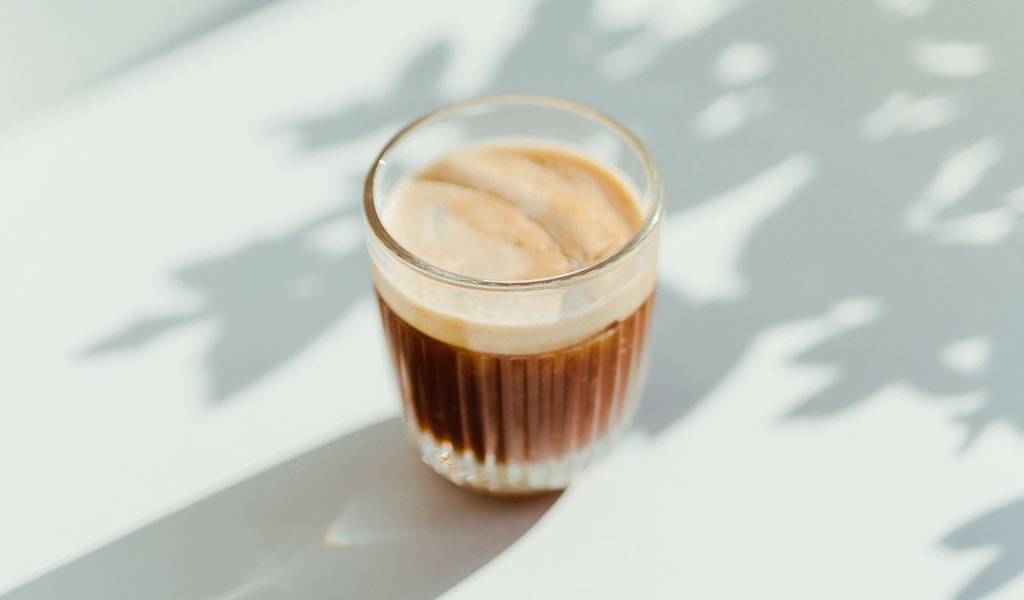
Price: $2,799 | Drink Options: 17 programmed | Grinder: AromaG3 | Milk System: Fine Foam Technology | Our Rating: 4.6/5

Beansage is reader-supported. When you buy through our links, we may earn a commission at no extra cost to you. Check the latest price on Amazon.
The $5.47 Latte That Made Me Question Everything
Here’s a number that should make any coffee lover uncomfortable: $2,008.
That’s what the average American spends at coffee shops every year, according to a 2024 survey by USA Today. Two lattes a day, five days a week, fifty weeks a year. The math is brutal.
I know because I was that person. Every morning, the same ritual. Drive to the cafe. Wait in line behind three people checking emails on their phones. Hand over $5.47 for a 12-ounce latte that I could finish before I pulled out of the parking lot.
The worst part? Half the time, the shot was pulled wrong. Burnt, bitter, rushed. But I kept going back because I thought making cafe-quality espresso at home was too hard. Too complicated. Required too much skill.
Then I spent 30 days with the Jura E8. A Swiss-engineered, $2,799 super-automatic espresso machine that grinds, tamps, extracts, and froths milk – all with one button. No barista training required. No mess. No waiting in line.
Is it worth nearly three thousand dollars? That’s the question I’m answering today. No fluff. No marketing speak. Just what happens when a serious coffee drinker puts this machine through its paces for a full month.
Let’s get into it.
Who Is Jura, and Why Should You Care?
Jura is a Swiss company that’s been building automatic coffee machines since 1986. They don’t make toasters. They don’t make blenders. They make one thing: super-automatic espresso machines. And they make them in Switzerland, not outsourced to the lowest bidder.
Walk into any high-end European hotel, Swiss bank, or luxury car dealership, and the coffee machine sitting in the corner is almost certainly a Jura. The brand owns the premium super-automatic space the same way Rolex owns dive watches.
The E8 sits in the middle of Jura’s home lineup – above the entry-level E4 ($1,399) and E6 ($1,899), but below the flagship Z10 ($4,399) and the commercial-grade GIGA 10 ($5,499). For most serious home users, the E8 is the sweet spot. You get Jura’s core technologies without paying for features you’ll never use.
The 2023 refresh of the E8 (sometimes called the “E8 2023” or “E8 Gen 3”) added a color touchscreen display, more drink options, and a redesigned brewing unit. That’s the version I tested.
Key Features That Actually Matter
Super-automatic machines all promise the same thing: push a button, get a drink. The difference is in the engineering underneath. Here’s what sets the E8 apart from every other machine I’ve tested.
P.E.P. – The Pulse Extraction Process
This is Jura’s secret weapon, and it’s not marketing nonsense.
Most super-automatic machines push water through the coffee puck in one continuous stream. That’s fine, but it leaves flavor on the table. P.E.P. (Pulse Extraction Process) pulses water through the grounds in short, rapid bursts – similar to how a skilled barista does a pre-infusion before pulling a shot.
The result? More surface area contact between water and coffee. Longer extraction time without over-extracting. In plain English: more flavor, more body, more crema. Jura claims P.E.P. increases extraction by up to 30% compared to standard brewing. I didn’t run lab tests to verify that exact number, but the taste difference is real. Shots come out with noticeably thicker crema and more complex flavor than anything I’ve pulled from a De’Longhi or Philips super-automatic.
You can also adjust the extraction intensity across 10 levels. Level 1 is a light, tea-like espresso. Level 10 is a punch-in-the-face dark roast. I settled on level 7 for most beans.
Check Jura E8 pricing on Amazon →
The AromaG3 Grinder
Here’s a stat that surprised me: the AromaG3 grinder inside the E8 is 50% faster than the previous generation. It also runs quieter – not silent, but quiet enough that my wife doesn’t wake up when I pull a 6 AM shot.
Jura uses conical steel burrs, which is the gold standard for grind consistency. The burrs are precision-cut in Switzerland and designed to preserve aroma by minimizing heat transfer during grinding. Hot burrs cook the oils in the beans before they ever touch water. That’s why cheap grinders produce flat-tasting coffee.
The grind adjustment is stepless, meaning you can dial it in precisely – not just “coarse, medium, fine.” The dial sits inside the bean hopper, which is a minor inconvenience. You have to empty the hopper to access it. But once you find your sweet spot, you rarely need to touch it.
The bean hopper holds 10 ounces (about 280 grams) – enough for roughly 25 double shots before refilling. There’s also a bypass chute for pre-ground coffee if you want to run decaf or a guest’s beans without emptying the hopper.
Fine Foam Technology
Milk systems are where most super-automatics fall apart. They either produce bubbly, dish-soap foam or scalded, lifeless milk. The E8’s Fine Foam Technology threads the needle beautifully.
The system pulls milk from an external container (either the included glass carafe or any container using the milk tube), heats it, and injects micro-fine air bubbles to create foam with a texture I can only describe as “melted ice cream.” It’s not quite the silky microfoam you’d get from a trained barista with a commercial steam wand – let’s be honest about that. But it’s closer than anything else at this price point, and it’s 100% automatic.
You can adjust both milk quantity and foam quantity from 1 to 10 seconds of dispensing. Flat white lovers will want shorter foam. Cappuccino drinkers will max it out.
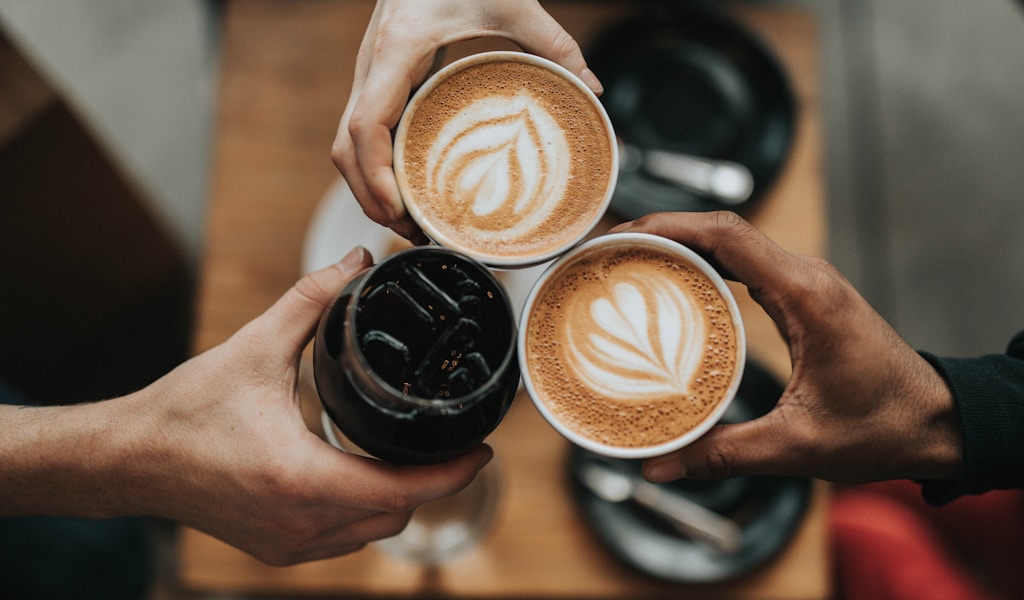
One smart design choice: the milk temperature can be set to low, medium, or high. My wife prefers her lattes at “low” (around 140°F). I like mine hotter. The machine remembers both preferences per drink profile.
The Smart Water System
If you’ve ever descaled a Keurig or Nespresso and questioned your life choices, you’ll appreciate this.
The Jura E8 uses RFID-enabled Claris Smart+ water filters. When you insert a new filter, the machine automatically detects it and adjusts the descaling schedule based on your actual water hardness – not a generic timer. Filter capacity is about 50 liters (roughly 400 shots). The machine tells you when to replace it.
Replacement filters cost about $18 each (check current price on Amazon). With average use, you’ll replace them every 2 to 3 months. That’s roughly $8 to $12 per month in filter costs – more on this in the “Honest Cons” section.
The water tank itself holds 63.6 ounces (1.9 liters), which is generous. I refill it every 2 to 3 days with heavy use.
17 Programmable Drinks (And the Ones I Actually Use)
The E8’s color touchscreen scrolls through 17 drink options: espresso, coffee, ristretto, lungo, cappuccino, latte macchiato, flat white, cortado, Americano, hot milk, milk foam, hot water, and several “extra shot” variants.
In 30 days, I used exactly six of them regularly: espresso, coffee, cappuccino, flat white, cortado, and hot water (for tea and Americanos). The rest are nice to have but not essential.
Each drink is programmable. Want a 1.5-ounce ristretto at intensity level 9 with 6 seconds of milk foam? You can save that. Want an 8-ounce “coffee” (not espresso – the E8 does long pours too) brewed at 175°F? Done. The customization runs deep, and the machine remembers individual profiles for different users.
One overlooked feature: the E8 can make two drinks simultaneously using the “double” function. Two espressos, two lattes. For couples, this is a game-changer on busy mornings.
Real-World Performance: 30 Days of Daily Testing
Spec sheets are one thing. Living with a machine for a month is another. Here’s what I learned.
Espresso Shot Quality
I tested the E8 with three different beans over 30 days: a medium-roast single-origin Colombian, a dark-roast Italian espresso blend from Lavazza, and a local roaster’s Ethiopian light roast.
The E8 handled all three beautifully, but it has a clear preference. Dark and medium roasts shine. The machine extracts deep chocolate, caramel, and nut notes with a thick, persistent crema that lingers for minutes. Light roasts are drinkable but slightly muted – you lose some of the bright, acidic, fruity notes that a pour-over would highlight.
Shot consistency was the real surprise. Over 30 days and roughly 90 shots, I had exactly two that I would call subpar – and both were my fault (grind was set too coarse after switching beans). Once dialed in, the E8 delivers the same shot every single time. No channeling. No temperature surfing. No wasted coffee dialing in every morning.
The crema is genuinely impressive. Thick, golden-brown, and mousse-like. It’s the first thing people notice when I serve them a shot. I’ve had friends who own Breville semi-automatics ask me how I got that much crema. The answer is P.E.P.
Milk Drinks: Lattes, Cappuccinos, Flat Whites
The milk system is the reason you buy an E8 over an E6. The E6 uses a traditional steam wand (or an optional manual frother). The E8 fully automates milk, and it does it well.
My wife drinks oat milk lattes. I drink whole milk flat whites. The E8 handles both without complaint, though oat milk produces noticeably less foam – that’s physics, not a machine fault.
Temperature consistency with milk drinks was excellent. I measured 140°F to 155°F across 15 milk-based drinks using a Thermapen. That’s the sweet spot. Hot enough to be satisfying. Not so hot that the milk proteins break down and taste scalded.
Cleanup is where the Fine Foam system earns its keep. After every milk drink, the machine runs a quick steam purge through the milk system. Once a day (or after extended use), you run the milk cleaning cycle – swap the milk tube into a container of Jura’s cleaning solution, press a button, and walk away. It takes 12 minutes and requires zero effort from you.
Stock up on Jura milk system cleaner tablets here →
Speed and Workflow
From power-on to first shot: 25 to 30 seconds. Startup includes a brief rinse cycle (the machine flushes water through the brew group), then you’re ready to brew.
An espresso takes about 45 seconds from button press to cup. A latte takes about 2 minutes including milk. A double cappuccino roughly 2.5 minutes. That’s significantly faster than a semi-automatic workflow (grind beans, dose, tamp, pull shot, steam milk, clean up), which easily takes 5 to 8 minutes.
The E8 also has an energy-saving mode. It consumes about 5 watts in standby versus 1,450 watts when brewing. Jura claims 40% energy savings compared to leaving it fully on. I set mine to auto-off after 30 minutes of inactivity.
The Price Question: Is $2,799 Actually Insane?
Let’s address the elephant in the room. $2,799 is a lot of money for a coffee machine. You can buy a decent used car for that. A MacBook Pro. A very nice vacation.
But coffee machines aren’t one-time purchases. They’re replacement for something you’re already paying for: the coffee shop. Let’s run the real numbers.
Jura E8 vs. Starbucks: The 5-Year Breakdown
The average specialty coffee drink (latte, cappuccino, flat white) costs $5.47 at Starbucks in 2025. Prices vary by city, but that’s a fair national average.
High-quality coffee beans for the E8 cost about $16 per 12-ounce bag. Each bag yields roughly 18 double shots. That’s $0.89 per shot in beans. Add milk ($0.25 per drink for whole milk, less for alternative milks from larger containers), plus filter replacement and cleaning supplies ($0.08 per drink), and you’re looking at about $1.22 per latte at home.
Here’s how the math plays out over 5 years, assuming 2 drinks per day:
| Scenario | Year 1 | Year 2 | Year 3 | Year 4 | Year 5 | 5-Year Total |
|---|---|---|---|---|---|---|
| Starbucks (2 lattes/day) | $3,993 | $3,993 | $3,993 | $3,993 | $3,993 | $19,965 |
| Jura E8 at home | $3,690 | $890 | $890 | $890 | $890 | $7,250 |
| Total Savings | $303 | $3,103 | $3,103 | $3,103 | $3,103 | $12,715 |
Year 1 includes the $2,799 machine cost plus consumables. The E8 breaks even around month 10. After that, you’re saving roughly $3,100 per year.
Even if you only drink one latte a day, the machine pays for itself in about 20 months. After that, every drink is essentially $1.22 instead of $5.47.
The Intangible ROI
This is harder to put in a table, but it matters more than the money: time. No driving to the cafe. No waiting in line. No dealing with a trainee barista who doesn’t know what a flat white is. You walk to your kitchen. You press a button. You have a genuinely excellent latte in under two minutes.
For two lattes a day, that saves roughly 30 minutes. Over a year, that’s 182 hours – more than four full work weeks of your life. What’s that worth?
Who Is the Jura E8 Actually For?
Not everyone. Let’s be clear about that. Here’s who should buy the E8 – and who absolutely shouldn’t.
Buy the Jura E8 If…
- You drink milk-based espresso drinks daily. The E8’s Fine Foam system is the standout feature. If you only drink black coffee or straight espresso, save $1,400 and buy the E4.
- You value consistency over the craft experience. The E8 delivers the same shot every single time. If you enjoy the ritual of manual espresso – dosing, tamping, dialing in – buy a semi-automatic instead. You’ll enjoy it more.
- Multiple people in your household drink different styles. The programmable drink profiles and one-touch operation mean your spouse doesn’t need to learn anything to get their morning latte.
- You’re replacing a daily coffee shop habit. The ROI math above applies directly to you. The E8 will pay for itself.
- You entertain regularly. Making 6 to 8 milk drinks back-to-back on a semi-automatic is a nightmare. The E8 handles it without breaking a sweat.
Skip the Jura E8 If…
- You only drink black coffee. A $150 Technivorm Moccamaster or a $30 pour-over setup will make better drip coffee than the E8’s “coffee” setting. The E8 is an espresso machine first.
- You enjoy the process of making espresso. The E8 removes you from the craft. For some, that’s the appeal. For others, it’s soul-crushing. You’ll know which camp you’re in.
- Your budget is under $1,000. There are very good super-automatics at lower price points. The De’Longhi Magnifica Evo ($699) and Philips 3200 LatteGo ($759) both make respectable drinks for a fraction of the price.
- You’re a light roast / third-wave coffee purist. The E8 favors medium and dark roasts. If you chase bright, acidic, fruity Ethiopian single-origins, stick with a pour-over setup.
The Honest Cons (No Review Is Complete Without Them)
I’ve recommended the E8 to friends. I stand by it. But I’ve also told them exactly what they’re signing up for. Here’s the full picture.
1. The Price Tag Is Painful, No Matter How You Spin It
$2,799 is $2,799. The ROI math works out over time, but you still have to write that check today. Jura machines rarely go on significant sale – you might save $100 to $200 during holiday events, but the prices are remarkably stable. Used Jura E8s on Amazon hover around $2,100 to $2,400, so even buying refurbished is a serious investment.
2. The Ongoing Maintenance Costs Are Real
Owning a Jura is like owning a German car. The entry price is just the beginning. Here’s what you’ll spend annually with moderate use (2 drinks/day):
- Claris Smart+ water filters: $18 each, replaced every 2-3 months = $72 to $108/year. Check filter prices here.
- Milk system cleaner (mini tabs): $31 per bottle, roughly $25/year. Check cleaner prices here.
- Descaling tablets: $19 per pack (9 tablets), roughly $15/year.
- Cleaning tablets (brew group): $20 per pack, roughly $15/year.
- Replacement milk pipe and connectors: $14 to $17, replaced annually = $15/year.
Total annual maintenance: roughly $135 to $175. Not deal-breaking, but not nothing. You can save about 40% by using third-party compatible filters and tablets – Glacier Fresh makes well-reviewed compatible filters, and many users report no issues.
3. The Grinder Adjustment Is Annoying to Access
Jura put the grind adjustment dial inside the bean hopper, under the beans. To adjust grind size, you need to empty the hopper (or wait until it’s naturally empty). This isn’t a dealbreaker – once you find the right setting, you typically leave it alone. But if you frequently switch between very different beans (light roast and dark roast often need different grind settings), this gets old fast.
4. Service and Repair Is a Headache
Jura doesn’t have a massive service network in the U.S. If something breaks outside the warranty period (2 years, or 18 months for commercial use), you’re shipping the machine to an authorized service center. There aren’t many. Turnaround can take weeks. Some users on Reddit and coffee forums report paying $300 to $500 for out-of-warranty repairs on aging Jura machines – typically brew group replacements or pump failures after 5 to 7 years of heavy use.
This is not a cheap machine to maintain long-term. Factor that into your purchase decision.
5. It’s Big and It’s Heavy
The E8 measures 11 inches wide, 13.8 inches deep, and 17.7 inches tall. It weighs 22 pounds. This is a serious piece of kitchen equipment. Make sure you have the counter space – and a counter that can support the weight. You also need clearance above the machine to access the bean hopper and water tank (both top-loading).
Jura E8 vs. The Competition
The E8 doesn’t exist in a vacuum. Here’s how it stacks up against the three machines most buyers cross-shop.
Jura E8 ($2,799) vs. De’Longhi Magnifica Evo ($699)
The Magnifica Evo is the best-selling super-automatic on Amazon for a reason: it makes decent espresso drinks at a price most people can stomach.
But the gap between these two machines is enormous. The Magnifica’s grinder is slower and louder. Its milk system (LatteCrema) works but produces bubblier, less refined foam. Shot quality is good – not great. The Magnifica also lacks the programmable drink customization the E8 offers.
If you’re a “good enough” coffee person, buy the Magnifica. If you want your home cappuccino to rival your favorite cafe’s, you need the E8.
Compare the De’Longhi Magnifica Evo on Amazon →
Jura E8 ($2,799) vs. Philips 3200 LatteGo ($759)
The LatteGo is the easiest milk system to clean in any super-automatic. The milk container snaps apart into two pieces that rinse under a faucet in 15 seconds. No tubes. No cleaning cycles. It’s brilliant engineering.
The trade-off is drink quality. The Philips grinder is ceramic (Jura uses steel), which runs cooler but produces slightly less consistent grinds. The LatteGo foam is airy rather than creamy. And the overall build quality feels plasticky next to the E8’s metal and high-grade polymer construction.
If cleaning effort is your #1 priority, the LatteGo wins. If drink quality is your #1 priority, the E8 wins by a mile.
Compare the Philips 3200 LatteGo on Amazon →
Jura E8 ($2,799) vs. Breville Oracle Touch ($2,799)
Interesting matchup: nearly identical price, very different approaches.

The Breville Oracle Touch is a semi-automatic with training wheels. It grinds, doses, and tamps for you (the portafilter self-tamps – it’s wild), but you still move the portafilter from the grinder to the group head. The steam wand is manual, giving you full control over milk texture. The Oracle has a touchscreen interface with saved drink profiles, similar to the E8.
Shot quality from the Oracle is slightly better than the E8. The 58mm commercial-sized portafilter and dual-boiler system produce shots with more clarity and body. If you’re willing to do 60 seconds of hands-on work per drink, the Oracle rewards you with better espresso.
The E8’s advantage is total hands-off operation. Beans in the hopper. Milk tube in the container. Press button. Walk away. The Oracle still requires you to move the portafilter, wipe the steam wand, and purge the group head between shots. Small tasks, but they add up.
Choose the Oracle if you want the best possible shot quality and don’t mind some hands-on effort. Choose the E8 if you want true “push button, get latte” operation.
Compare the Breville Oracle Touch on Amazon →
The Verdict: Is the Jura E8 Worth It?
After 30 days, roughly 90 shots, and somewhere north of 40 milk-based drinks, my answer is yes – with a clear understanding of who the “yes” applies to.
The Jura E8 is the best-tasting super-automatic espresso machine I’ve tested under $3,000. The P.E.P. extraction produces shots with genuine depth and complexity. The Fine Foam Technology creates milk textures that are 85% as good as a skilled barista – and it does it automatically, every time, without complaint. The machine is built like Swiss watchmaking applied to coffee: precise, substantial, and clearly engineered to last a decade or more with proper care.
But “worth it” depends on your personal math.
If you’re replacing a twice-daily coffee shop habit, the E8 saves you roughly $12,700 over five years – even after factoring in beans, milk, filters, and maintenance. The machine literally pays for itself, then keeps saving you money.
If you’re a casual coffee drinker who’s happy with a $30 Mr. Coffee or a pod machine, the E8 is massive overkill. You’ll never recoup the investment, and you won’t appreciate what makes it special.
The bottom line: the Jura E8 is a luxury product that can be financially justified. Not many things in life fit that description. If you’re the right buyer – the person who genuinely cares about coffee quality but doesn’t want a morning project – there’s nothing else on the market that nails the balance quite like this machine does.
Jura E8 Rating Breakdown
| Category | Rating | Notes |
|---|---|---|
| Espresso Quality | ★★★★★ (4.7/5) | Best-in-class for super-automatics. P.E.P. delivers genuine depth. |
| Milk Drinks | ★★★★★ (4.6/5) | Creamy, consistent foam. Not quite manual-wand microfoam, but very close. |
| Ease of Use | ★★★★★ (5/5) | One button. Seriously. That’s it. |
| Build Quality | ★★★★★ (4.8/5) | Swiss engineering. Feels like it’ll outlast you. |
| Maintenance | ★★★★☆ (3.8/5) | Automated cleaning is great. Ongoing costs of filters and tablets add up. |
| Value | ★★★★☆ (3.7/5) | Expensive upfront. Excellent value long-term for daily users. |
Where to Buy the Jura E8
The Jura E8 is available from several retailers. Amazon typically has the most competitive pricing and fastest shipping, but I recommend checking multiple sources:
- Amazon – Jura E8 (tag=beansage-20)
- Jura Official Website: us.jura.com (MSRP pricing, but includes full warranty)
- Williams Sonoma, Sur La Table, and Crate & Barrel: Often have in-store demos so you can see the machine before buying
If you’re in Canada or the UK, Jura’s regional websites offer local pricing and warranty support.
Recommended accessories and supplies:
- Jura Claris Smart+ Water Filters
- Jura Milk System Cleaner Mini Tabs
- Jura Descaling Tablets
- Jura Glass Milk Container (Replacement/Spare)
- Replacement Milk Pipe with HP3 Connector
- Premium Espresso Beans (Dark Roast)
Frequently Asked Questions
What’s the difference between the Jura E8 and Jura E6?
The E6 costs $1,899 versus the E8’s $2,799. The main differences: the E8 has a color touchscreen (E6 has buttons + text display), Fine Foam Technology for automatic milk drinks (E6 uses a manual steam wand), 17 programmed drinks (E6 has 11), and more granular drink customization. If you mostly drink black coffee or manually steamed milk, the E6 is the better value. If you want one-touch lattes and cappuccinos, spring for the E8.
How often do I need to clean the Jura E8?
Daily: rinse the milk system (automatic purge after each drink) and empty the drip tray/grounds container as needed. Weekly: run the milk cleaning cycle (12 minutes, automated). Every 2-3 months: replace the Claris Smart+ water filter. Every 6-12 months: run the descaling program. The machine prompts you for all of these on the display.
Can the Jura E8 make regular coffee, not just espresso?
Yes. The E8 has a “Coffee” setting that produces a longer extraction (up to 8 ounces). It’s closer to an Americano than drip coffee – espresso diluted with water – but it’s quite good. The machine also dispenses hot water separately for tea or pour-over coffee.
Does the Jura E8 work with non-dairy milks?
Yes, but results vary by milk type. Oat milk (especially barista editions) works best – it froths well and has a neutral flavor. Almond milk produces thinner foam. Soy milk can curdle at high temperatures, so use the “low” milk temperature setting. Coconut milk produces thick but unstable foam. The Fine Foam system handles all of them better than most competitors.
Can I use pre-ground coffee in the Jura E8?
Yes. There’s a bypass chute on top for pre-ground coffee. This is useful for decaf beans or flavored coffee that you don’t want mixing with your regular beans in the hopper. The bypass chute holds enough for one serving at a time.
How long does the Jura E8 last?
With proper maintenance, Jura machines typically last 8 to 12 years. The most common failure points are the brew group and the pump, both of which are serviceable. Jura offers a 2-year warranty. Extended warranties through third-party retailers (Amazon, Williams Sonoma) are worth considering given the machine’s cost.
Is the Jura E8 loud?
The AromaG3 grinder is quieter than most competitors, but it’s not silent. Grinding produces a low hum for about 8 to 10 seconds per shot. The pump is similarly subdued. You won’t wake up the house, but you also won’t mistake it for a whisper-quiet appliance. If ultra-quiet operation matters, the E8 is better than the De’Longhi Magnifica and Philips 3200, but not as quiet as a manual setup.
What’s the warranty on the Jura E8?
Jura provides a 2-year limited warranty for home use (or 18 months for commercial use). The warranty covers manufacturing defects but not normal wear and tear, improper use, or damage from non-Jura cleaning products. Extended warranties are available through most retailers.
More Coffee Gear Resources
If you’re still deciding what type of espresso machine is right for you, start with our comprehensive guide:
- Complete Guide to Espresso Machines for Busy People – Everything you need to know before buying, from super-automatic to manual, with brand comparisons and real budget recommendations.
Disclaimer: Beansage is a participant in the Amazon Services LLC Associates Program. As an Amazon Associate, we earn from qualifying purchases. This does not affect the price you pay or our review integrity – we only recommend products we’ve tested and believe in.
Last updated: June 2026. Prices and availability are subject to change.
Affiliate Disclosure: As an Amazon Associate, beansage.com earns from qualifying purchases. When you buy through our links, we may earn a commission at no extra cost to you. We only recommend products we stand behind.
Leave a Reply